India: Apeda foots bill for Japanese mango export
However, it comes with conditions. Exporters will have to undertake a written consent to export a minimum amount of mangoes per year — 50-70 metric tonnes in 2015, 100 metric tonnes in 2016 and 150 in 2017. The move has been well-received by mango exports, who believe that it will help reduce their export expenses.
Officials from APEDA, which took the decision in view of negligible mango export to Japan in the past two years, claimed that exporters requested them to bear stationing costs of the Japanese Quarantine Inspector in India during the Vapour Heat Treatment (VHT), a non-chemical alternative to control and quarantine unwanted insects and fungi, administered to make Indian mangoes competitive in the Japanese market.
A senior APEDA official told Mirror, "Japanese authorities have expedited procedural obligations to step up mango import from India, following which, we have taken this decision and asked the exporters to give us the consent in writing within 10 days to initiate further action." He added that officials from Japan have already sought details of VHT facilities in Andhra Pradesh, Gujarat, Uttar Pradesh, Maharashtra and West Bengal to appoint a supervisor for inspection. Interestingly, the health ministry of Japan in July had exempted inspection for chlorpyrifos, a chemical residue in Indian mangoes.
According to a protocol signed between the two countries, Japan accepts VHT mango varieties of Alphonso, Kesar, Banganpalli, Langra, Chausa and Malika from the above mentioned states only.
Sudhanshu, deputy general manager and regional head (western) of APEDA, told Mirror that stringent norms set by Japanese authorities made exports plunge to almost nil in the last two years. "However, we want to tap the Japanese market, hence we decided to incur the expenses."
On being asked why exporters had never shown interest in the Japanese market, Sudhanshu said, "Exporters had never got the expected market price in the past. We have no set estimation of price now and will explore the market in Japan to gain an idea."
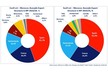
After two decades of ban on the king of fruits, because of suspected pest infestation by fruit flies, Japan allowed imports from India on June 23, 2006. Most mango imports are made to West Asia, USA and countries of south Asia and the European Union. On the other hand, Japan ranks 51 in the list of countries which import mangoes from India, behind the smaller economies of Mali, Poland, Zambia and Portugal. UAE, with over 50 per cent share, leads the pack.
Source: punemirror.in