India: Boosting Kiwi fruit cultivation at Tsupfume
Taking advantage of the favourable climatic condition and suitable soil for Kiwifruit in Tsupfume, the Land Resources department in the same year provided 12,000 Kiwifruit saplings (Hayward variety) for the village after giving training and management to the villagers/farmers.
Of the 300 plus household in the villages, almost all the farmers in the villages are engaged in Kiwifruit plantation along with other crops. Around 20,000 standing plants are there in the villages where 12,000-13,000 plants started bearing fruit and ready to be harvested.
So far, Tsupfume has harvested 50 Kg of Kiwifruit in the year 2012 and in the year 2013 it has harvested 200 Kilo and in the year 2014 it is expected to harvest 2500 Kilo which is sold in Hornbill festival, Dimapur and on the way side of National Highway @ Rs 120- 150 depending on the quality of the fruit. Farmers also disclosed by 2020 the harvest is expected to 80,000-95,000 Kilo a year.
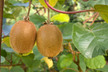
Having vast knowledge of the fruit, Ngonyi Lea, chairman, watershed committee IWMP said, Kiwifruit the most popular exotic fruit available throughout the year look dull and small externally but internally its green flesh embedded with artistically arranged black seed is loaded with nutrients. Its unique flavour is a treat for taste bud that will remind you of straw berries and melons.
He also said, Kiwifruit has health many benefit such as antioxidants protect cellular DNA against damage caused by free oxygen radicals, reduces inflammation, prevents recurring infections, treat sleep disorder, improve lipids profile, boost good cholesterol, treat constipation, good for asthma patents, protect your eyes etc of Kiwifruit consumption.
The chairman also stated that encouraged by the hard work, Mhathung Yanthan, director, LRD who recently visited the project assured to give another micro-water shed project.
Although it is associated with New Zealand, Kiwifruit actually originated in the Chang Kiang valley of China Known as known as Chinese gooseberry where the Chinese use as tonic for children and women after child birth due to high nutritional value. Like most of the plants, Kiwifruit plant is a wind and insect pollination, which also needs both sexes where male and female tree ratio of 1:6 to 1:9 is to be maintained. To learn more of the technique in cultivating the fruit and to get more technical support, farmers have been send to attain training and exposure trip to Kiwifruit grown areas like Himachal, Jammu Kashmir and other north eastern states where it is grown.
Source: morungexpress.com