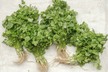
“Some extreme weather in Israel a couple of weeks ago resulted in a shortage of basil,” explained Gaia Herbs' Berto Levy. “But, in my opinion, there will be enough basil to recover in about 10 days.” He noted that the good weather growers have been enjoying will go a long way towards a fast recovery. Additionally, growers were quick to plant replacement crops immediately after the bad weather cleared, and with the fast growth rate of basil plants, a few weeks of good weather should be enough to shore up supplies.

“Basil grows very fast in Israel, and the weather has now been very good,” said Levy. “So as long as there are no diseases or anything out of the ordinary, 10 days will be enough to get good supplies.” That's good news for Israeli herb growers who are increasingly facing competition from producers in India, Kenya and Ethiopia. While Levy noted that buyers still prefer Israeli basil because of its quality, he admitted that there are many advantages that African growers, in particular, have in the herb business.

“There is a price difference,” said Levy. “When there's a shortage, though, clients don't mind that Israeli basil is a bit more expensive because they want the quality.” But when it comes to other herbs, African growers have the advantage of a labor supply that can accommodate client requests for labor-intensive bunches.

“The herb market is not easy,” said Levy. “There's lots of competition from India and Africa because they can offer very low prices, so it's hard to compete, but we're doing our best.”
Fo
 r more information:
Berto Levy
Gaia Herbs
Email: [email protected]
www.gaiaherbs.co.il