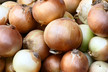
Philippines: Plan to take back lost shallot markets
Vieva said that it hoped for government assistance that would help growers to reclaim the previous level of trade.
"We’ll be happy if exports will reach as much as 50 container vans per week. That’s what we hope in 2013," Vieva President Leah Cruz said.
Usual destinations are Indonesia, Malaysia, Singapore and Hong Kong.
However, as importers increased their standards, around 2006, the trade started to decline. For example, Indonesia now observes GlobalGap methods and has banned use of certain fertilisers and pesticides as a result - some of which are still in use n the Philippines.
Cruz said that as of September 2012, exports amounted to only 5,200 metric tons (MT). In 2011, exports reached 14,222 MT.
Because of the decline in demand, farmers were forced to sell at a loss, with prices averaging as much as P25 per kilogram, from as high as P80 per kilo.
Vieva said the Department of Agriculture (DA) offered to assist shallot farmers to improve their farming methods and increase yield in preparation for the revival of exports to traditional markets and possibly, expansion to other foreign destinations.
The High Value Crop Development Program, which conducted a study on the shallot industry, recommended that the productivity of shallot producers could be raised through the application of scientific methods of farming, subsidized seedlings and farm inputs and the expansion of areas planted to shallots.
Source: rappler.com