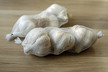
Garlic may provide key to food poisoning cases
US: Garlic better than antibiotics
The discovery paves the way for new treatments of raw and processed meats as well as food preparation surfaces.
"This work is very exciting to me because it shows that this compound has the potential to reduce disease-causing bacteria in the environment and in our food supply," said Xiaonan Lu, a postdoctoral researcher and lead author of the paper.
"This is the first step in developing or thinking about new intervention strategies," saif Michael Konkel, a co-author who has been researching Campylobacter jejuni for 25 years.
"Campylobacter is simply the most common bacterial cause of food-borne illness in the United States and probably the world," Konkel said. Some 2.4 million Americans are affected every year, according to the U.S. Centers for Disease Control and Prevention, with symptoms including diarrhea, cramping, abdominal pain and fever.
The same bacteria are responsible for triggering nearly one third of the cases rare,
paralyzing disorder, Guillain-Barré syndrome.
Infections usually arise from raw or undercooked poultry, or cross contaminated foods.
Lu and his colleagues looked at the ability of the garlic-derived compound, diallyl sulfide, to kill the bacterium when it is protected by a slimy biofilm that makes it 1,000 times more resistant to antibiotics than the free floating bacterial cell. They found the compound can easily penetrate the protective biofilm and kill bacterial cells by combining with a sulfur-containing enzyme, subsequently changing the enzyme's function and effectively shutting down cell metabolism.
The researchers found the diallyl sulfide was as effective as 100 times as much of the antibiotics erythromycin and ciprofloxacin and often would work in a fraction of the time.
The researchers say, however, that their work is at an early stage currently and they are not close to an application based on the garlic compound. Consumption of garlic alone is not thought likely to prevent, or cure, poisoning from Campylobacter.
Source: www.sciencedaily.com