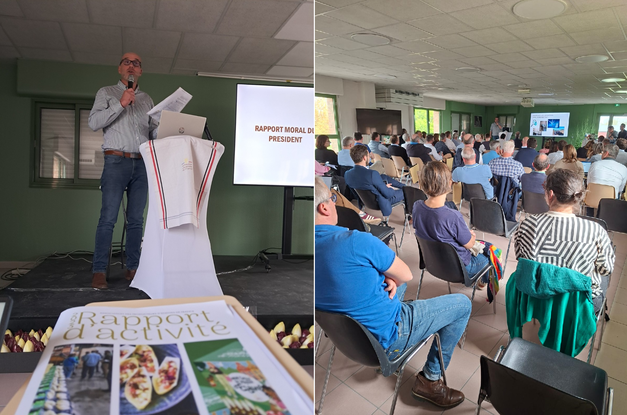
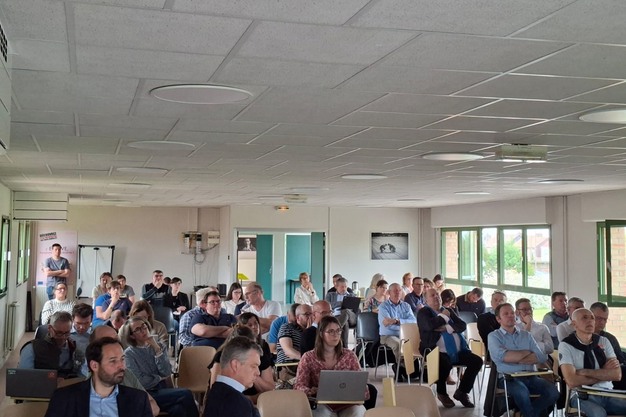
The Association of French Endive Producers (APEF) held its annual general meeting on April 9th. The agenda included a review of the 2025 campaign and, above all, a presentation of the work in progress: varietal selection, weed control, woolly adelgid management, adaptation to climate change, and root conservation. We spoke to Pierre Varlet, director of APEF.
 © APEF
"We remain confident"
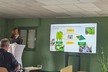
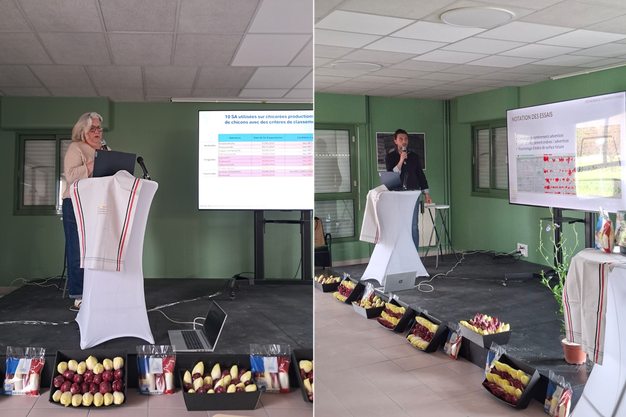
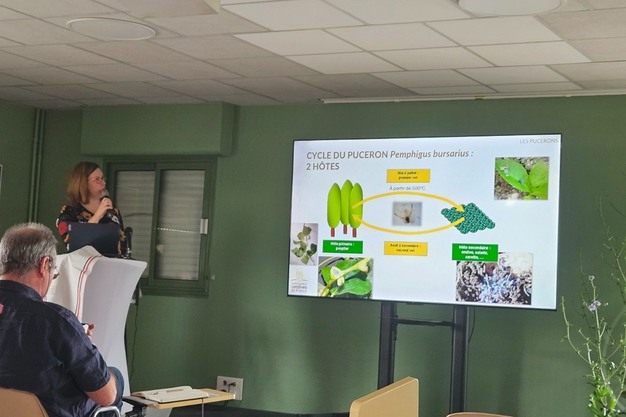
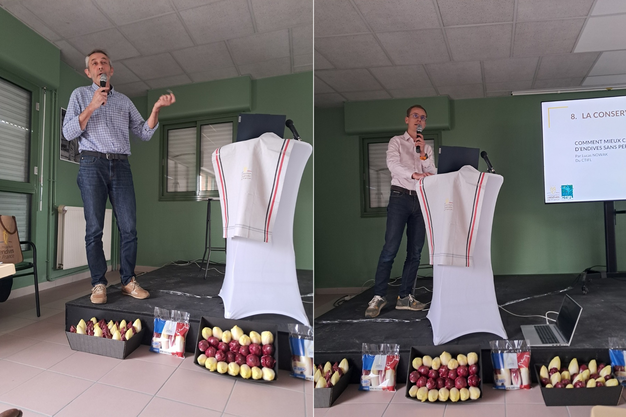
The general meeting was punctuated by a series of speeches, each lasting around ten minutes. Among the speakers was Benoît Anquez, of DDTM62, who outlined the regulatory framework for water abstraction in Hauts-de-France. Thomas Cochenille, of the Université de Picardie Jules Verne, presented the initial results of his thesis on the management of woolly adelgid using essential oils. As part of its efforts to combat the pest, APEF has applied for a derogation for Movento (withdrawn in 2025). Finally, Sophie Szilvasi (DGAL/Ministry of Agriculture) gave an overview of the current situation regarding the protection of endive crops, particularly with regard to authorized active ingredients. "There is still a lot of work to be done on experimentation, as we risk losing new plant protection products, particularly those designed to combat storage diseases," explains Pierre Varlet. Trials are underway as part of Parsada. "We have a number of solutions to test, not all of which will be successful, but we remain confident."
In terms of weed control, the sector is also exploring innovative AI-based solutions. For the third year running, trials are being carried out on APEF plots with the support of its partners.
 © APEF
A new communication strategy
Until now, the sector's communication has been essentially reactive. "It was a fire-fighting strategy: we communicated when we needed to," admits the director. Today, the approach is evolving, targeting under-consumers of endives in order to recruit new buyers. The 2024-2025 campaign marked a turning point, with large volumes sold over the summer period. "We are now able to take the season out of our product, which is very positive. Consumers no longer see endives as just a winter product. The challenge now is to anchor consumption throughout the year by continuing to work together to increase awareness of the product and improve communication."
Another objective is to win back the market share lost when supply was too low. The start of the 2025-2026 campaign looks encouraging, with consumers being recruited and consumption levels rising. The only setback is valuation. "After two very good campaigns, we have had a few periods where production was a little sluggish, with difficulties in getting the product to market," explains Pierre Varlet.
 © APEF
Towards a joint France-Benelux strategy?
Competition from the Benelux countries remains a key issue for the French sector. "Prices are not good. At less than 50 eurocents [0.59 USD] on the auction block, we do not understand how production is valued. For most of the year, we find Belgian endives below our production costs," explains Pierre Varlet. "There are only three producer countries in Europe, so it is a shame not to be able to exchange ideas to understand the market better and, above all, build a common strategy." APEF is hoping to forge new links, particularly at the endive biennial to be held in Switzerland in September. "There is a need to work together at the European level, because it is not healthy to be in constant competition in a sector like ours." The development of export markets could also offer some opportunities. "Today, we export to Italy and Germany, but why not develop other outlets, especially at certain times of the year when the market here is less buoyant."
 © APEF
Packaging made from endive roots
There is another avenue to explore, this time on the packaging side. Élodie Choque, a researcher at the Université de Picardie Jules Verne, is working on an alternative to traditional plastic packaging by developing a bioplastic made from endive roots. The roots are cut up and dried before being ground into powder, which is then reworked to create a polymer. Although the initial results are encouraging, there is still some way to go. "The tests are working on dry products, but not yet on fresh products, because the polymer is not hydrophobic," explains Pierre Varlet. Another limitation is the lack of transparency of the packaging, which is still a barrier to consumer purchase. Nevertheless, the sector is hoping to see the product in use by 2030, particularly as this innovation could be of economic interest. "Today, the roots are not recycled. They are mainly used as animal feed or for methanization."
 © APEF
For more information; © APEF
Pierre Varlet (director)
APEF
2, rue des Fleurs
62000 Arras
Phone: +33 (0) 3 21 07 89 89
[email protected]
endive.fr