The North American carrot market is facing supply pressure due to weather-related disruptions in California, while demand across product formats remains firm, and import activity is being explored.
California's carrot sector is dealing with reduced availability following what sources describe as the wettest and coldest November to December period in around 100 years in the Bakersfield region. This has limited fresh carrot supply and is affecting processing operations, with IQF carrot production expected to be delayed until July.
Supply constraints are also reflected in grade availability. B-grade carrots are broadly available, while A-grade product remains limited. This creates challenges for processors and buyers requiring higher-grade inputs.
 © Mintec/Expana
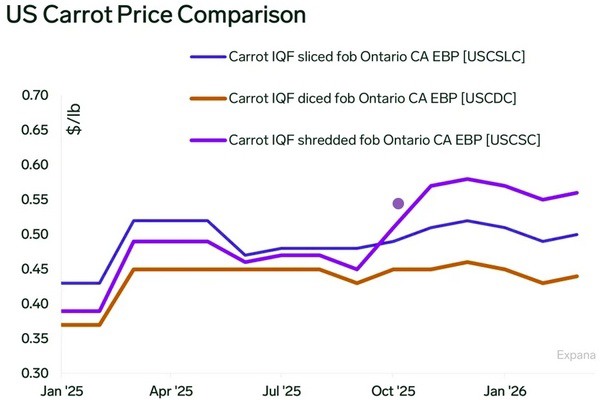
Despite the reduced supply, demand remains active across multiple formats. Industry sources indicate a strong interest in sliced carrot products, with buyers willing to accept California pricing premiums to secure volumes. Demand extends across applications, including snacking and meal preparation.
Regional supply conditions show contrast. While North America is dealing with tight supply, parts of Europe report surplus volumes, leading to price pressure. Belgium is active as a supply origin, with diced, sliced, and julienne B-grade formats available.
This regional imbalance is creating trade opportunities, although logistics costs and container availability continue to influence landed costs. The seasonal nature of production adds complexity, with domestic supply typically limited until June to August.
Inventory constraints are also affecting the market. Much of the available volume is committed under contract, reducing the amount of product available for the spot market. This limits flexibility for buyers seeking immediate supply.
Market expectations suggest that fresh carrot availability may not improve until mid-May, as spring crop transitions begin in Bakersfield. Further developments will depend on planting progress and weather conditions in key growing regions.
Source: Mintec/Expana