A research team from the University of Granada and ibs.GRANADA (Instituto de Investigación Biosanitaria), in collaboration with the Cellbitec Foundation, has found natural compounds in the seeds of the S0506 aubergine variety that can inhibit tumor growth and target cancer stem cells. This hybrid variety, developed by crossing different species, has been shown to slow the growth of colon cancer cells. Published in Food Bioscience, the study reveals that extracts rich in flavonoids and polyphenols can suppress tumor development and target cancer stem cells with minimal toxicity to healthy cells. These findings, validated in cell culture and animal studies, present a promising approach to colon cancer treatment.
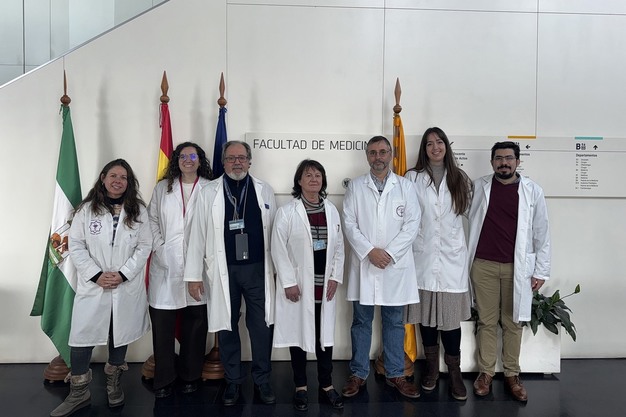
The study was conducted by the CTS-107 and A01 teams from the Biomedical Research Centre at the University of Granada (UGR) and ibs.GRANADA, led by José Carlos Prados and Consolación Melguizo. It also involved the AGR-145 team from the Instituto Mixto Universitario Deporte y Salud, led by Jesús M. Porres, and the Cellbitec Foundation of Almería, represented by Francisco Bermúdez.
Researchers examined an extract from mature, defatted aubergine seeds of the S0506 variety (Solanum melongena L.), provided by the biotechnological group Beyond Seeds. Using advanced techniques, they identified bioactive compounds, including kaempferol, quercetin, and protodiosin. When tested on human and murine colorectal cancer cell lines, this extract demonstrated a strong anti-proliferative effect, even at very low doses.
 © ibs.Granada
Laboratory studies have partly unveiled how these compounds work, mainly by activating pathways that induce apoptosis (programmed cell death) and autophagy (a cell death process). They also alter the cytoskeleton of tumor cells. Importantly, the extracts impact tumor stem cells, which are believed to drive drug resistance and relapse. At the same time, trials have shown minimal or no toxicity in normal cells.
The research has advanced to a pre-clinical stage, involving animals with induced tumors. Treatment with aubergine seed extracts has resulted in a substantial reduction in tumor size. Additionally, in other experimental models, a significant reduction in angiogenesis—the formation of new blood vessels necessary for tumor growth—has been observed. This anti-angiogenic effect further supports the compound's therapeutic potential.
Colon cancer is among the most common cancers worldwide, so finding new treatment options continues to be a priority.
The results support continued research, including more detailed studies at the molecular and pharmacological levels, with a focus on safety, optimal dosing, and potential future applications.
For more information:
ibs.Granada
www.ibsgranada.es