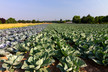
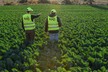
The 2025/2026 brassica export season in Spain is currently underway, with a lower production and shortages expected in the coming weeks as a result of the constant rains during much of the winter. On a commercial level, Spanish exporters have so far faced higher costs and unusually low market prices. Now the fight against pests such as aphids and whitefly, and the lack of effective tools, is keeping the sector on tenterhooks as spring approaches.
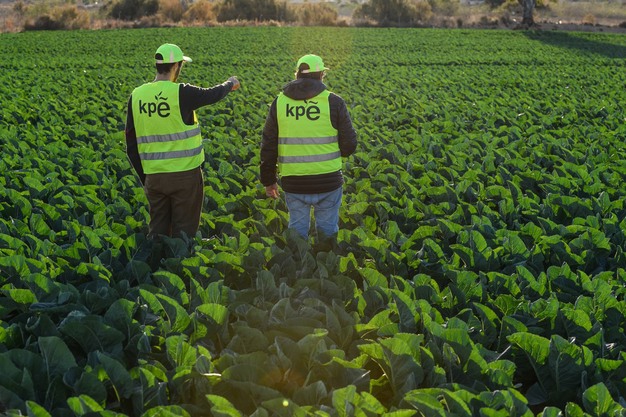
"In terms of production, the brassica season had been going fairly well, practically up until the end of December, after which there was a very rainy period that lasted up until the beginning of this year. Until then, yields were decent, and quality was quite good," says Juan Manuel Ruiz, Sales Director of Kettle Produce España.
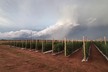
"After several years with warmer winters than usual, we're back to having somewhat colder and normal temperatures for this time of year. This, together with weather phenomena such as persistent rainfall and strong winds, has taken a noticeable impact on our crops, although more in quantitative than in qualitative terms," he says.
Therefore, according to Juan Manuel Ruiz, there is bound to be a sharp drop in supply. "We have been harvesting plantations that were already planted before the rainy period started, and which have had little root development and, therefore, only limited growth. The plants are small, with not a lot of green mass, so yields are much lower than expected. In addition to this, there have been difficulties with the planting in this period, and the impact of this will be noticeable in the coming weeks."
As far as sales are concerned, the season got off to a difficult start due to the overlap between Spanish broccoli crops and the last batches from the countries to which the former are traditionally exported. "Demand hasn't been great until the end of the year, and the excess supply of products such as cauliflower in France hasn't helped either," says the Sales Manager of this company, which annually produces more than 40,000 tons, mainly broccoli, cauliflower, and different types of cabbage during the winter, as well as melon during the summer.
"Our costs continue to rise due to the situation in the domestic market, as well as geopolitical factors. Unfortunately, market prices have stood at levels we hadn't seen since before the pandemic. The case of kale is different, as at a general level, plantations have been reduced due to problems in its production," says Juan Manuel Ruiz.
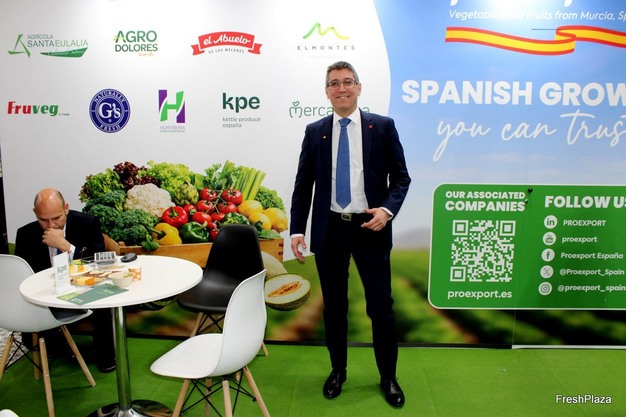 © Joel Pitarch | FreshPlaza.com
Juan Manuel Ruiz at the Proexport stand in Fruit Logistica 2026.
Southeastern Spain is the largest producer of brassicas, with complementary production areas in other parts of Spain and in some European countries. Italy, for example, is a competitor for a large part of the fall, winter, and spring.
"However, the biggest problem and one of the main concerns currently in the sector is the lack of tools to fight certain pests, such as aphids or whiteflies. For reasons we fail to understand, these are not authorized for exceptional use in Spain, while in other European countries, such as Italy, Portugal, France, or the United Kingdom, they have been authorized, and that will allow them to save their crops in the coming months," says Juan Manuel Ruiz.
"Meanwhile, the immobility of our authorities will, unfortunately, cause the loss of many more hectares here, which will have a severe impact on employment and the economy of the area. What greater competition is there than not having a level playing field within the European Union? We are not even talking about third countries. This incomprehensible situation could further undermine the end of the campaign and lead to even worse economic results than expected," says the commercial director of Kettle Produce España.
"This isn't only affecting broccoli and cauliflower, but also other products, such as lettuce, citrus fruits, and artichokes, not to mention kale. Melon and watermelon could be next. We are highly concerned, as we are already behind in almost everything. The problem is growing bigger every day; we need urgent and exceptional solutions, while alternatives are sought and developed," says Juan Manuel Ruiz.

Para más información:
Juan Manuel Ruiz Soler
Kettle Produce España
Autovía A7. Km. 605 Las Flotas
Alhama de Murcia, Spain
[email protected]
www.kp-spain.com