Researchers at Wageningen University & Research are developing artificial intelligence models designed to help verify the geographic origin of food products using images. The research focuses on supporting inspectors and importers in identifying potential cases of food fraud more efficiently.
Food fraud affects high-value products such as saffron and organic produce. Mislabeling products for financial gain remains a common issue, while in some cases the risks extend to food safety. "In Europe alone, the damage caused by food fraud is estimated at 8 to 12 billion euros per year," said researcher Yamine Bouzembrak.
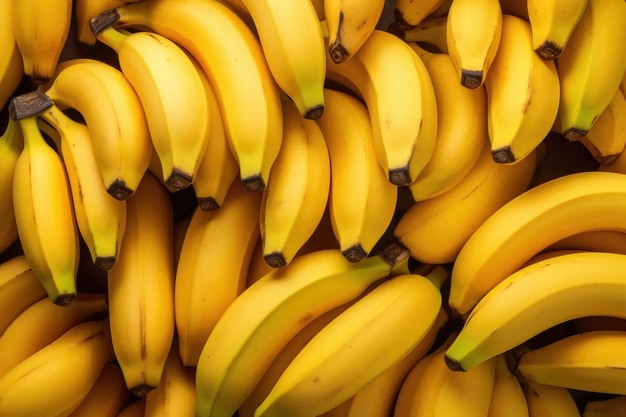
The project explores how artificial intelligence, combined with publicly contributed image data, could assist in detecting inconsistencies in product origin. Bouzembrak drew inspiration from iNaturalist, an online platform where users share photos and biodiversity data. Using this concept, researchers asked participants to upload images of bananas from 20 countries, along with origin information.
 © Wageningen University & Research
The team applied a convolutional neural network to analyse color, texture, and shape patterns in the images. "That's when I realized such a system could also work for food products," Bouzembrak said. After processing thousands of images, the researchers tested the model by predicting banana origins based solely on photographs.
"The accuracy was surprisingly high—over eighty percent," Bouzembrak said. "That's very promising, but for a usable prototype, we aim for at least ninety-five percent."
The research remains at an early stage, and the model is intended as a support tool rather than a replacement for laboratory analysis. "With an AI system like this, you can more quickly identify which batches of bananas deserve extra attention. Inspectors and laboratories remain essential to conclusively prove fraud," Bouzembrak said.
The approach is best suited to products with distinct visual characteristics. Bouzembrak noted that dried or whole products such as saffron, vanilla, or nuts are better candidates for image-based analysis. "Saffron, for instance, is an expensive spice – from 3,000 to 10,000 euros per kilogram – that often turns out not to be of authentic origin."
Liquid products present greater challenges due to limited visual variation. "With olive oil or honey, determining origin through photos is much more difficult because they simply show too little visual variation," Bouzembrak said.
The researchers plan to further assess which products can be reliably included and to improve the model's accuracy. Bouzembrak said he is seeking interest from stakeholders involved in food inspection and import controls to support further development. "My focus is on the scientific research," he said.
In the longer term, Bouzembrak noted that similar techniques could be applied to assessing product freshness or quality, potentially expanding their use beyond origin verification.
For more information:
Wageningen University & Research
Tel: +31 317 488753
Email: [email protected]
www.wur.nl