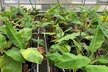
Root, tuber and banana (RT&B) crops are widely cultivated across sub-Saharan Africa. The extensive planting of RT&B crops highlights their adaptive nature, but a team of researchers has identified a need to obtain more specific knowledge on how these crops might respond to long-term changes in climate.
Researchers focused their study on banana, cassava, potato, and sweet potato cropping within the Great Lakes Region (GLR) of Central-East Africa – an area that is bordered by the countries of Burundi, the Democratic Republic of the Congo, Kenya, Malawi, Rwanda, Tanzania, and Uganda.
The study was a collaborative effort of modelling and crop scientists representing the International Institute of Tropical Agriculture, International Potato Center, CGIAR Research Program on Climate Change, Agriculture and Food Security, International Livestock Research Institute, CGIAR Research Program on Roots, Tubers and Bananas, Bioversity International, and the African Plant Nutrition Institute.
The study used a crop suitability model that analyzed and mapped crop growth under both a historical climatic baseline and a future projection of average climatic conditions influenced by the impacts of greenhouse gas emissions.
Source: apni.net