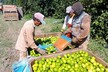
As citrus greening and climate change threatens Bhutan's citrus industry, farmers are looking to diversify away from their traditional cash crop. For more than three decades, mandarin orchards in Bhutan have provided farmers and orange exporters with more than just a livelihood option. In 2014, exports of the fruit brought more than $10 million to Bhutan.
Hundreds of orange growers of Dagana, Tsirang, Sarpang, Samtse, Samdrupjongkhar, Zhemgang and PemaGatshel districts are faced with failing crops due to the citrus disease. In December, local leaders of Nanglam village in Bhutan’s southwestern district of SamdrupJongkhar said that they might not be able to meet their annual performance agreement to produce 600 metric tonnes of oranges. This was because most trees were either not bearing fruit or the fruits were falling off the trees before ripening.
Climate change also strikes
Thinley Zangpo, an agriculture extension officer in Panbang, where orange growing farmers suffered major losses last year, said, “Other factors, such as erratic rainfall due to climate change, are also affecting flowering and fruition of orange groves.”
New crops
As a consequence, the farmers are trying to diversify their products. Dorji has started cardamom plantation on two acres of his land, like many other farmers of Dagana and Tsirang. “I believe cardamom is likely to replace oranges in future,” said Dorji. Cardamom requires less land than oranges, and could also fetch a higher price. In Zhemgang district, some farmers have already started growing avocados as a response to low orange production. Similar problems were also reported from other southern districts of Tsirang, Samtse and Sarpang.
District agriculture officials said that farmers were increasingly growing alternative crops such as kiwi fruit, mangoes, avocados and cardamom. The agricultural ministry is trying to encourage farmers to cut down dried citrus trees and plant new ones to avoid spreading of citrus greening. They fear that, “If farmers choose to abandon citrus (orange) over other plants, they would face difficulties when it comes to marketing. Unlike oranges, other fruits face a high degree of market competition.”
Source: The Third Pole/ scroll.in