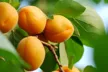
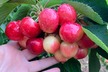
When it comes to pears, Belgium is, of course, mostly associated with the Conference, but in recent years, more and more promising new varieties have been entering the market. One of these is the Fred pear, for which BelOrta has acquired the rights in the Benelux. "Production is growing every year, and we therefore see a positive future for this variety. Both in terms of production and sales, the prospects are good, and there is clear interest from the market," says Laurent De Smedt, divisional head of top fruit at the cooperative.
 © BelOrta
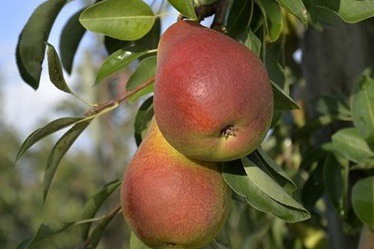
The Fred, a cross between the Verdi and Harrow Sweet varieties, is a Swiss pear. "This pear is clearly different from the Conference, both in appearance and taste. In the Belgian supply, we have increasingly seen a shift towards lightly blushed pears in recent years. The light blush makes the product more visually attractive, as it stands out more on the shop shelf than a completely green pear. In that sense, it is easier to position and differentiate the product," he continues.
"But the distinction is not only in appearance. Flavor and texture also play an important role. It is a pear that remains firm while also offering a melt-in-the-mouth sensation, somewhat comparable to an apple. This makes it pleasant to eat. Unlike some other varieties, it also retains some bite, which makes it particularly appealing to consumers who appreciate texture."
Spreading the harvest
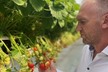
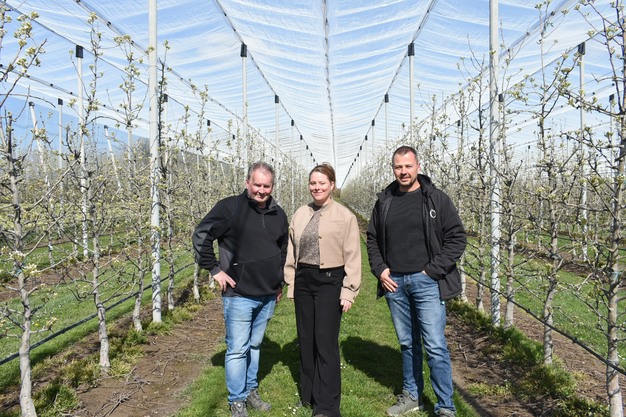
BelOrta currently has about 35 hectares of Fred pears, divided among several growers. One of these growers is Frank Schoofs from Herk-De-Stad, who decided to start working with the pear back in 2017. "The decision to plant this variety was mainly driven by the need for more diversity on the farm," he explains. "An important advantage is that it can be harvested after the conference, allowing for a better spread of the harvest season. It fits in well with the end of the Conference harvest," says the pome fruit grower.
 © Jannick Flach | FreshPlaza.com
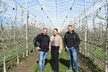
Grower Frank Schoofs with Mieke Thoelen and Erwin Smolders of BelOrta
"Moreover, Fred has proven to be a relatively easy variety to grow," Frank continues. "The fruit does need to reach sufficient size, but the tree sets well on its own. This means that intensive thinning is usually not necessary, which is a major advantage. Pruning is also fairly straightforward. It mainly involves light work with minor corrections, without the need for heavy intervention or removal of thick branches. That makes it practically manageable."
The variety is grown and marketed within a club structure, which offers both opportunities and obligations. According to Frank, the added value is clearly reflected in the price, but the system requires trust from growers. "The final payment only comes after the entire crop has been sold. That means that, as a grower, you have to believe in the organization and the concept. Without that trust, it will not work. That is why we do not see it as a replacement, but as an addition to the existing range. It is a way to diversify and spread risks."
"The investment is higher, though. The trees are more expensive, and sorting also involves additional costs. That causes some growers to drop out. Still, it can be financially attractive. Even in a bad year, we still made 75 cents net for pears of average quality. In better years, you exceed one euro, which is simply a good price."
 © BelOrta
Segment
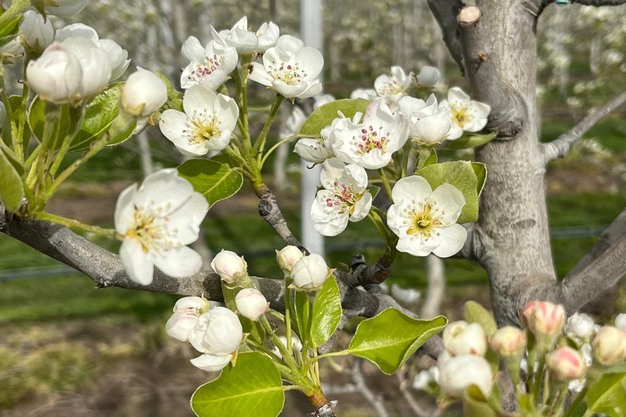
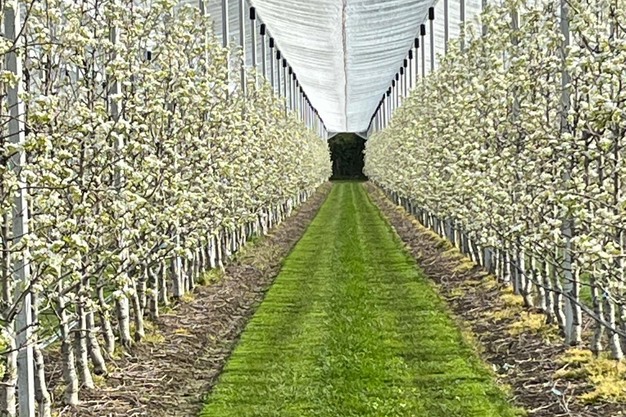
This is also where Erwin Smolders, R&D field representative at BelOrta, comes in. Frank and Erwin show blossoms for the new harvest on Frank's plot. "Fred is in a different segment. It is a pear with a clear and distinctive flavor profile. That makes the product stand out and provides variety alongside more common varieties. The variety clearly distinguishes itself in the market and can command a premium price. Yet you notice that many growers remain cautious. They first want to see how others perform before taking the step themselves. That is understandable, especially as long as existing varieties are still performing well."
However, they see that growers eventually recognize the benefits. "In addition to the spread in harvesting, the club concept also helps create added value. The product is more exclusive and less widely available, which also supports the price. Moreover, taste is a major advantage, and the pear retains its firmness well during storage. The variety is also productive. Volumes are really starting to increase now. We were at around 630 tons in total, with peaks of up to 63 tons per hectare. That shows there is clear potential."
Confidence in sales
Last season has given the team confidence that growers can be convinced of a future with Fred. "Last season showed clear growth. Sales and production increased strongly. The season went very well overall. We harvested about 600 tonnes, which is almost a threefold increase compared to the previous year. This is mainly because the young orchards are now starting to come into production," Laurent says.
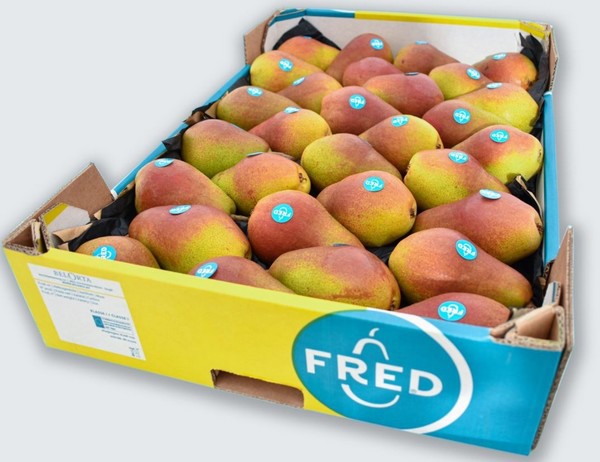
"In terms of sales, the season also went smoothly. Retail, particularly in class I pears, in Germany accounted for a significant share of the volumes. In addition, there was also clear growth in Belgium, partly thanks to a new customer." Growth is expected again for the coming season, although Laurent notes it will be less pronounced than last year. Another tripling is not expected, but a doubling is considered realistic. "We are aiming for production of around 1.2 to 1.5 million kilos. However, this remains highly dependent on fruit set and seasonal conditions."
European growing area, Benelux in focus
Fred pear cultivation is currently spread across several countries. Key regions include Switzerland, France, Belgium, and Italy. "We hold the license for both cultivation and sales in the Benelux, but there is strong cooperation among license holders. Extensive research into cultivation, storage, and quality is ongoing. That knowledge is shared between different countries where the variety is grown, such as Belgium, France, Italy, and Switzerland. By pooling experiences, we aim to continuously improve cultivation."
Overall, BelOrta sees a positive future for the variety. Both production and sales show growth potential, and market interest continues to increase.
 © BelOrta
For more information:
BelOrta
Mechelsesteenweg 120
B-2860 Sint-Katelijne-Waver, Belgium
Tel: +32 (0) 15 55 11 11
[email protected]
www.belorta.be