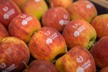
In recent days, reports have emerged raising concerns that Poland's apple harvest could be halved due to frost damage. Although it is still too early to make firm predictions, Tony Derwael of Bel'Export says the situation should be taken seriously. "Whereas the shrill easterly wind here in the maritime climate mainly caused dehydration, in the continental climate it has caused major frost damage," says the Borgloon-based trader.
Within Europe, Poland in particular plays a key role. "Poland is by far the largest producer within the EU, with a normal harvest of 4-5 million tons of apples," Tony explains. "But countries such as Ukraine, Moldova, and Belarus, together accounting for more than 2 million tons, should not be underestimated and have also suffered damage. Not only apples were affected; summer fruits, such as berries and plums, were also badly hit by the late-night frosts."
 © Bel'Export
According to him, the first signals from the market are clear. "Based on our contacts and reports from the sector, there is talk of harvest reductions of 30 to even 50 per cent due to last week's spring night frost." Earlier winter frosts may also have played a role. "We still need to determine whether temperatures below -20 degrees several months ago caused additional damage to trees and rootstocks."
Still, there may be mitigating circumstances for Poland. "In Poland, more efforts have been made in recent years to use more robust rootstocks, such as quince Eline in Conference pears. These are less susceptible to frost, so there may be less reason to fear permanent damage in the coming years."
Doubling prices
For the coming harvest, Tony nevertheless expects a clear impact at the European level. "We can expect at least 2 million tons to drop out of European apple production. This would take us below the consumption threshold of 10 million tons. In 1991, we saw a similar situation, with production around 9 million tons. At that time, a shortfall of around 2 million tons led to a doubling of prices, even for old-crop fruit from the previous year. It is obviously very unpleasant for them, but there is a saying: 'One man's death is another man's bread.'"
This could perhaps provide a solution for the large apple volumes from the current season that are still in storage. "There is still quite a lot of stock available. That is creating considerable pressure on the current market. These larger stocks are weighing on the market and keeping prices too low. I also expect that at the start of the new season, the market will not be completely cleared, but, difficult as it may be, the newly emerging situation in Eastern Europe could bring some relief."

"There are currently no more overstocks in green and yellow apple varieties such as Greenstar and Golden Delicious," Tony explains. "As a result, demand and pricing are developing more favourably than for bicoloured apple varieties, prompting a critical evaluation of the current variety range. Remarkably, the situation is completely different from the Golden crisis in the late 1970s and early 1980s, when it was precisely the bicoloured varieties that performed better than varieties such as Golden and Granny Smith, for which shortages rather than surpluses are now being observed."
Impact on export flows
For Belgium itself, Tony paints a more moderate picture of the new apple harvest. "For apples, I still expect a normal harvest next season. It will be about 25 per cent lower than last year, but of course we had a top harvest then." For pears, the situation is slightly different. "There, I also expect a normal harvest, but because we had much lower volumes available last year, it will actually end up being about 25 per cent higher. So both harvests will, in all likelihood, return to normal compared to last year."
According to Tony, the problems in Eastern Europe could cause major shifts in the market. "That region has traditionally been an important supplier to markets such as Russia. If their production falls, other countries will have to absorb that demand."
For pears, he expects a more limited effect. "Eastern Europe is not a major player in pears, although Poland is still relevant, with around 100,000 tons of production. If that volume were to halve, for example, 50,000 tons would disappear from the market. That would have an impact, but it would be less drastic than in apples."
For more information:
Tony Derwael
Bel'Export
Neremstraat 2
3840 Borgloon - Belgium
Tel: +32 12 440 551
[email protected]
www.belexport.com