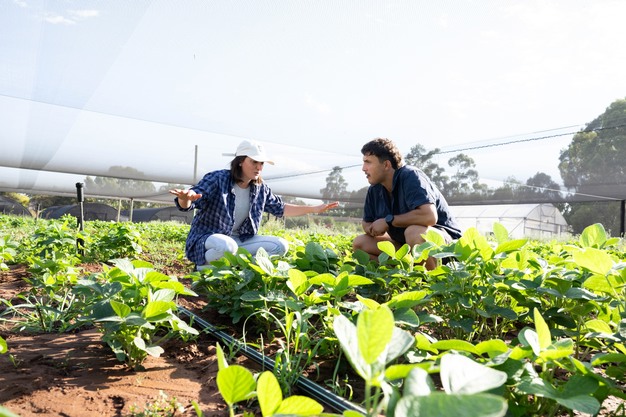
Australian growers are losing up to one million tonnes of fruit and vegetables before that produce ever reaches market, with losses valued at as much as $2.5 billion a year. For Francesca Goodman-Smith, director of research, development, and extension at End Food Waste Australia, that is not simply a waste problem. It is a profitability problem.
"Horticulture is one of the most significant sectors affected by food waste," Goodman-Smith says. "Weather changes, extreme weather events, demand changes, and buying habits all drive significant loss."
 © End Food Waste Australia
The scale is substantial. Across Australian horticulture, around 1 million tonnes of crops are wasted every year, while average on-farm food loss rates sit at about 20 per cent. More broadly, food waste costs the Australian economy an estimated $36.6 billion annually.
"The key driver for tackling this issue is that we understand it is getting harder and harder for growers to remain profitable," Goodman-Smith says. "Internationally, we've seen that reducing food waste can increase grower profitability by up to 20 per cent — and that's what we're really targeting through this project."
A three-year national research program led by End Food Waste Australia and Hort Innovation, due to run until June 2028, is aimed at helping growers retain more value from every harvest by identifying where losses occur and finding commercially realistic ways to recover that value. One of its main areas of focus is product specifications.
 © End Food Waste Australia
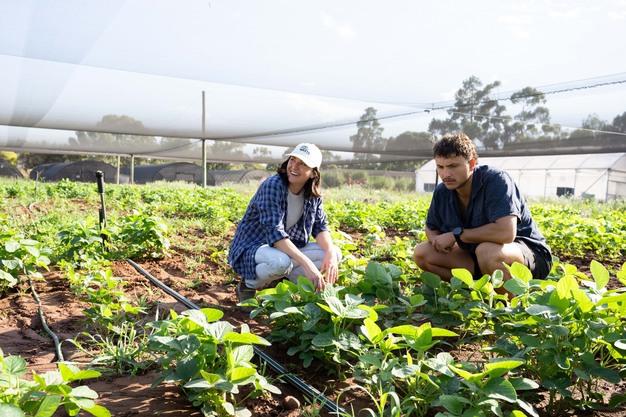
"A lot of produce never makes it to the consumer because of the strict cosmetic specifications we have for produce," Goodman-Smith says. "We're looking at getting consumer data on tolerance for widening those specifications."
That matters because very small changes can have a very large effect. "Even a two-millimetre change to the acceptable diameter of a potato can lead to thousands of tonnes of extra food being sold through primary markets," she says. "There are changes you can barely detect with the naked eye, but they can make a very big difference."
 © End Food Waste Australia
Goodman-Smith says the project is designed to replace assumptions with evidence. "We've got anecdotal evidence that supply chain players say consumers won't buy certain products. But this study is set up to test in a very scientific way what consumer acceptance actually looks like."
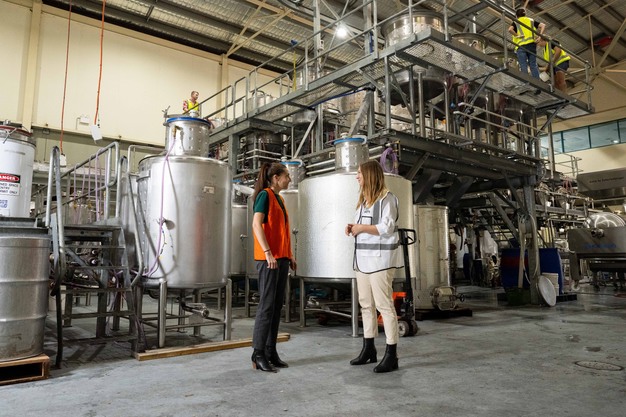
The second major strand of the project looks beyond the fresh market, focusing on second- and third-grade produce that would otherwise stay on the farm.
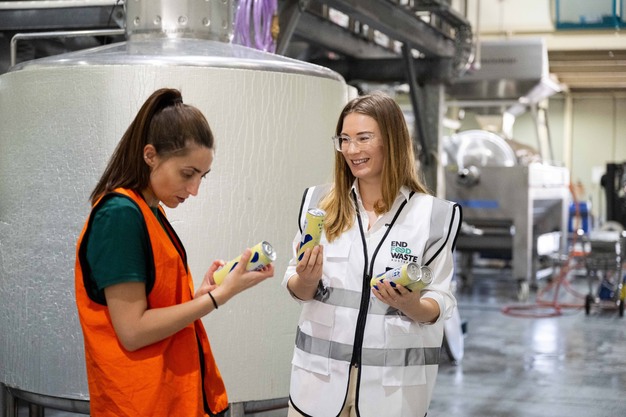
"How do we open up new market channels for transforming that food into valuable products?" Goodman-Smith says. "Whether it's fruit and vegetable powders, animal feed, or soil amendments, it's about keeping those resources within a circular food system."
 © End Food Waste Australia
Timing is critical, she says. "In the earlier stages of the supply chain, if you intervene early and have the right markets set up, you can extract much more value from produce. By the time you get all the way to the consumer, your options are very limited."
Practical adoption will depend on growers hearing from other growers. Goodman-Smith points to SSS Strawberries, which converted surplus and out-of-spec fruit into freeze-dried products.
"They've reduced their waste by 80 per cent," she says. "That's where you really see change: peers talking to peers."
More than 30 growers are already involved in the project's advisory group, and all findings will feed into a dedicated knowledge hub. Others are invited to get involved and can register their interest at endfoodwaste.com.au/horticulture.
"This is nutritious food we're talking about," Goodman-Smith says. "It's such a crime to be wasting so much of it when one in three Australians is battling food insecurity."
For more information:
Amelia Mitchell
End Food Waste Australia
Tel: +61 458 136 858
[email protected]