The Israeli citrus season is heading towards its final stretch, says Betsalel Ohana, export manager of Planet Israel Farms: "As we reach the closing weeks of the 2026 citrus season, the Israeli Orri Jaffa mandarin continues to solidify its reputation as the gold standard of easy-peelers, despite the challenges of the geopolitical situation. This season has been defined by a significant rebound in production, exceptional fruit quality, and a strategic shift in market visibility driven by supply gaps from other Mediterranean origins."
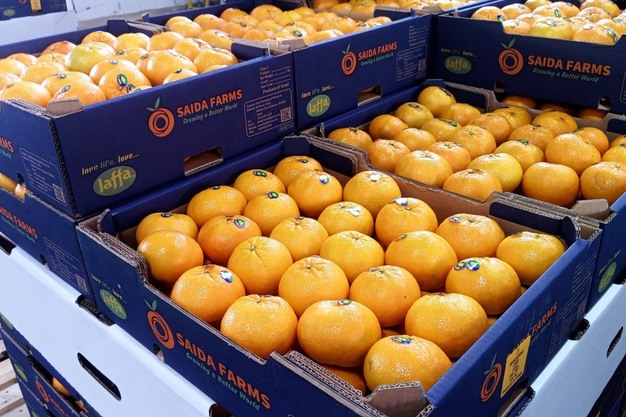 © Saida Farms
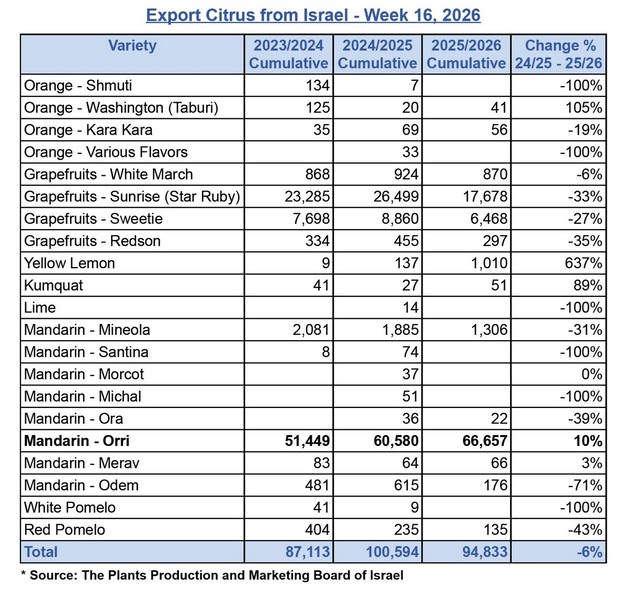
Ohana states that this year's season has been an improvement over the previous year. "Compared to the 2025 season, which was characterized as an off-year in the natural biennial bearing cycle of citrus trees, 2026 has seen a substantial recovery. Early season projections from the Orri Running Committee indicated a 22% increase in total volume. Total production for 2026 is estimated at approximately 100,000 metric tons, a healthy rise from the 92,000 to 95,000 tons seen in 2025."
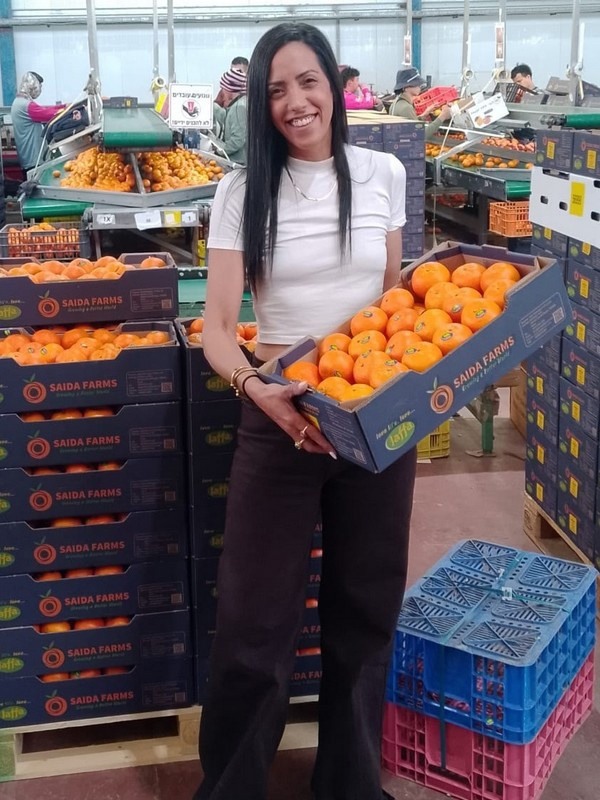 © Saida Farms "This stabilization is not just a result of the natural cycle; it reflects the long-term investment Israeli growers have made in high-density planting and advanced irrigation systems that help mitigate environmental fluctuations. Exportable yields have specifically stabilized around 62,000 to 65,000 tons, increasing by about 10%, ensuring a consistent flow to international retail partners."
According to Ohana, fruit size is a critical factor for the Orri, as consumer preferences vary significantly by region: "This year, the size distribution has been particularly favorable for premium markets. Unlike the 2025 season, which produced a higher proportion of smaller fruits (2–3 calibers), the 2026 crop is dominated by medium-to-large fruit. The larger sizes (60–80 mm) represent the bulk of the harvest, thanks to optimal pollination and rigorous thinning techniques. North American markets, specifically the US and Canada, have absorbed the largest calibers (1XXX and 1XX), while Western European retailers have maintained steady demand for the versatile medium sizes (1X and 1)."
Ohana states that while European citrus production, particularly in Spain, Italy, and Portugal, struggled with adverse weather, Israeli cultivation enjoyed a relatively favorable window. "Spain saw a dramatic 50% decline in Orri volumes due to storms and poor fruit set, and Italian orchards faced sorting losses as high as 40–50% following heavy rains. In contrast, Israel experienced adequate rainfall and sunshine, with no major hail or frost events to compromise fruit quality. These stable conditions allowed the fruit to develop its signature high sugar levels (14–15º Brix) and the perfect acid balance that defines the Orri profile."
 © Saida Farms
The demand for Orri mandarins remains robust, often outstripping the supply of premium-grade fruit, Ohana explains: "In Europe, Israeli fruit has become significantly more visible on the market as traditional competitors faced shortages. France continues to be the locomotive of the Orri demand, receiving roughly 39-45% of the total volume, followed by Germany, the UK, and Scandinavia. Consumers in these regions are increasingly seeking zero-waste products; the Orri's shelf life means retailers face lower shrinkage or waste compared to other varieties. The Canadian and US markets show steady growth, accounting for approximately 18% of exports, with a focus on premium retail chains. The reputation of the "Orri Jaffa" brand as a premium snack is driving higher per-capita consumption, even as competition from local Californian easy-peelers remains stiff."
"Pricing in 2026 has shown signs of stabilization compared to the supply-constrained 2025 season," Ohana continues. "While increased volumes have led to slightly lower prices (roughly 5–10% down) compared to the €2.00–€2.50/kg highs of last year, the Orri still commands a significant premium. In wholesale markets like Rome and Turin, Israeli Orri has reached €2.70–€3.00/kg, significantly higher than Spanish Nadorcott (€1.60–€1.80/kg) or Sicilian varieties (€1.20–€1.70/kg). This niche positioning allows Israeli growers to remain profitable despite rising freight costs (up 15%) and currency fluctuations."
"One of the most notable shifts this season is the industry's focus on sustainability. Growers are increasingly adopting digital orchard monitoring and water-saving technologies. Additionally, the industry has managed to overcome significant labor shortages, a hurdle in previous years, through a combination of government support and volunteer initiatives, ensuring the harvest stayed on schedule," Ohana concludes.
For more information:
Betsalel Ohana
Planet Israel Farms
Tel: +972.54.738.3436
[email protected]
www.planetisrael.farm