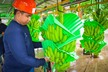
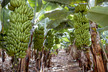
In Kenya, banana growers are adopting processing to reduce post-harvest losses and stabilise income. In Kisii County, overripe bananas are being converted into flour through small-scale processing units, extending shelf life and enabling sales beyond local markets.
"Before, we were at the mercy of the market," one grower said. "Now we can hold value."
Across sub-Saharan Africa, post-harvest losses for fruit and vegetables are estimated at 40 to 50 per cent due to limitations in storage, logistics, and processing capacity. Processing into flour, chips, or puree extends shelf life from days to months, supports price stability, and allows access to wider markets. Industry estimates indicate that processed banana products can increase export earnings by up to 42 per cent, depending on product mix and market access.
Processing activity is expanding across multiple countries. In Kisii County, Nyangorora Banana Processors produces banana flour, doughnuts, and porridge using supplies from smallholders. In Zimbabwe, a plant in Mutasa District aggregates and processes bananas for structured buyers. In Ghana, Golden Exotics operates around 2,000 hectares and is shifting toward processed banana products such as chips and puree for regional markets. In Angola, Novagro combines production and processing for export to Europe and African markets.
The African Continental Free Trade Area is supporting market access by reducing tariffs and aligning trade rules, expanding opportunities for processed goods across regional markets. Intra-African trade currently accounts for 15 to 20 per cent of total trade.
Processing supports value chain development by increasing unit prices, reducing waste, and creating employment in areas such as operations, quality control, and logistics. However, constraints remain. Transport costs are high, cold chain capacity is limited, and power supply can be inconsistent. Disease risks, including Banana Bunchy Top Virus and Fusarium Wilt, affect production stability. Technology and certification requirements also remain barriers for smaller operators.
The model is being considered for broader application. In Nigeria, similar approaches are being assessed for crops such as cassava, tomatoes, and fruit for juice and concentrate production.
Processing is positioned as a link between production and market access, with outcomes dependent on infrastructure, standards, and supply chain integration.
Source: Business Day