For South African farmers targeting international markets, export readiness extends beyond product quality to compliance, traceability, food safety assurance, and maintaining an unbroken cold chain.
Agricultural transformation specialists Maikutlo Matubatuba and Tshepo Mokgothu of the Perishable Products Export Control Board (PPECB) outlined how the export system is structured. The PPECB, established in 1926, provides quality certification and cold chain management services and operates as a self-funded Schedule 3A public entity reporting to the Minister of Agriculture.
Matubatuba said the regulation supports competitiveness. "When a farmer exports a consignment, whether grapes to China or citrus to Europe, the aim is to ensure that South African produce can compete with any other origin in the world," he said.
Exporting requires compliance across multiple regulatory layers. Three core certificates are required: an export certificate, a valid food safety certificate, and a pre-cooling certificate, all issued by the PPECB. Certain markets also require a phytosanitary certificate from the Department of Agriculture.
"For destinations such as the USA, China, or Taiwan, a phytosanitary certificate is required. The Department of Agriculture inspects the consignment, and once compliance is confirmed, they issue the certificate," Matubatuba said.
The PPECB operates under the Agricultural Products Standards Act and inspects consignments and production systems. "Traceability is essential; it is about farm-to-fork accountability. If an inspector arrives at your farm or depot, and the consignment passes inspection, an export certificate is issued," Matubatuba said.
Food safety certification includes audits assessing compliance with Good Agricultural Practices. Mokgothu said farms must operate as regulated food production businesses.
Temperature control is a core requirement. The PPECB audits packhouses, cold rooms, depots, and vessels to ensure conditions are maintained. The process includes harvesting, inspection, cold storage, container inspection and sealing, and continuous temperature monitoring.
"Even at sea, vessel captains provide 24-hour temperature reports for all containers. This ensures that when produce reaches markets like China after 30–40 days, quality is still intact," Matubatuba said.
Laboratory testing supports export certification, including maximum residue level analysis. "No exporter can access certification without laboratory verification of chemical residues. This ensures compliance with both local and international food safety standards," Mokgothu said.
PPECB laboratory services include MRL testing for fruit and vegetables, and quality verification for export commodities.
Audits include surveillance, verification, and unannounced inspections. "If non-conformances are identified, farmers are given time to correct them. However, if they are not resolved within the required period, certification may be withdrawn," Mokgothu said. "We cannot certify a farm that has no production records or active operations. Compliance is evidence-based."
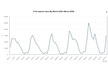
The PPECB provides export intelligence data. South Africa is the second-largest citrus exporter globally, with around 63 per cent of fruit exported. The European Union accounts for 36 per cent of imports, while Asia, the Middle East, and North America are growing markets. Cape Town is a leading export port, with peak exports around August.
Source: FoodForMzansi