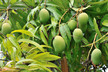
"We handle mangoes year-round, from January through December, exporting to Europe, the Middle East, Hong Kong, and Canada," stated Mario Otsuka, CEO of Gold Fruit. He also highlighted the importance of their diversified production approach, which includes varieties such as Palmer, Keitt, and Kent, enabling them to maintain steady export schedules.
However, the 2026 mango season in Brazil has faced several challenges. A key concern is the rise in logistics and energy costs, particularly given the current international situation. "One of the main challenges is that costs will increase; sea and air freight will go up," the executive said.
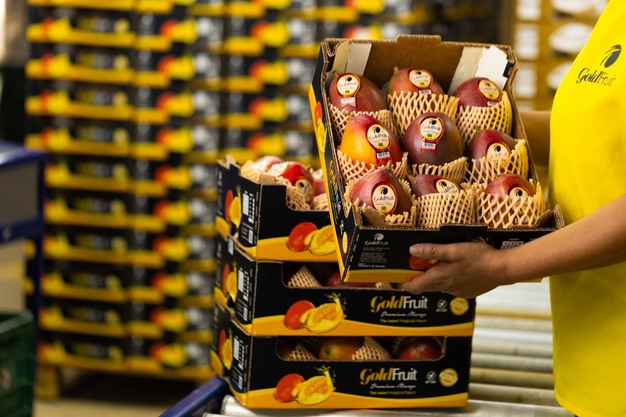 © Gold Fruit
This increase directly affects the sector's profitability. According to Otsuka, in many cases exporters have to absorb part of these costs: "Sometimes the market will not accept a higher price, so we have to assume the cost".
Europe remains the primary destination for Brazilian mangoes. Shipments to the Middle East have temporarily declined. Meanwhile, the domestic market is gaining importance, supported by a large local consumer base.
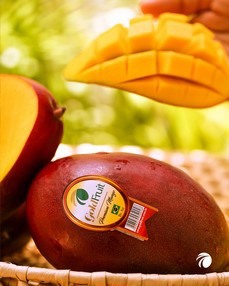 © Gold FruitPrice and volume trends are driven by global supply and demand factors. International competition, especially from countries such as Peru, puts pressure on Brazilian exporters during their production window. "The supply from other countries is high, and sometimes they are more aggressive, so we reduce supply," Otsuka stated.
Brazil holds an advantage by being able to adjust its harvesting schedule. While Peru focuses its production from November to March, Brazil extends its harvest until late November or December, helping to prevent direct overlaps during important market periods.
Another significant challenge is the availability of labor in the fields. "One of the challenges of Brazilian agriculture is this problem of labor shortage," says Otsuka, explaining that social factors affect the lower availability of workers for agricultural tasks.
In response to this situation, companies are implementing measures like labor incentives and integrating technology into packaging processes. Nonetheless, the executive acknowledges that automation has its limits: "There is no way to replace 100% of the workforce; people are needed."
 For more information:
Mario Otsuka
Gold Fruit
Brazil
Tel: +55 87 98108 2612
Email: [email protected]
www.goldfruit.com.br