 © CAPACAt the start of June 2026, Christo de Jong will have been at the helm of the CAPAC packhouse for two years. Along with the Robertson-based packhouse's name change came a rethink of its strategic direction, its values, and its relationships with producers, employees, exporters, and others in the citrus value chain, like processors and suppliers of packaging material, postharvest chemical products, and transport.
Right: Building relationships of trust and recognition is a priority for Christo de Jong at the multi-commodity CAPAC packhouse, busy for 11 months in a year.
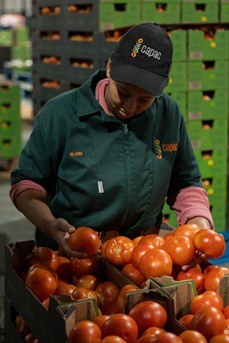
It is a slower time in the fruit calendar for them at the moment: tomatoes are stepping down while the first lemons are coming in – the first seedless HRPs last week, the first Eurekas this week, De Jong says. In two or three weeks, citrus packing will be at full speed: much is expected of the Western Cape's lemon crop.
Following the geopolitical situation and expected input cost increases, he remarks that they have already noticed a steep rise in plastic packaging material, for example, the bags into which tomatoes are packed, but he doesn't expect cardboard packaging to be as acutely affected by rising oil prices. That said, there's no doubt that price increases across the whole value chain will be palpable with an impact on profitability. However, the stronger Rand and the strong global demand for fresh produce should result in good prices back to the farm.
"A packhouse is a cost in the value chain, so this year we decided to redefine ourselves. We want to fulfil the role of an entity that unlocks value for the grower. We understand the interests of our producers, which is why we aim to find a home for every fruit in the bin. We've realized that, to be sustainable in the future and to maintain the loyalty of growers – because without them we have no reason to exist – we need to do things a little bit smarter."
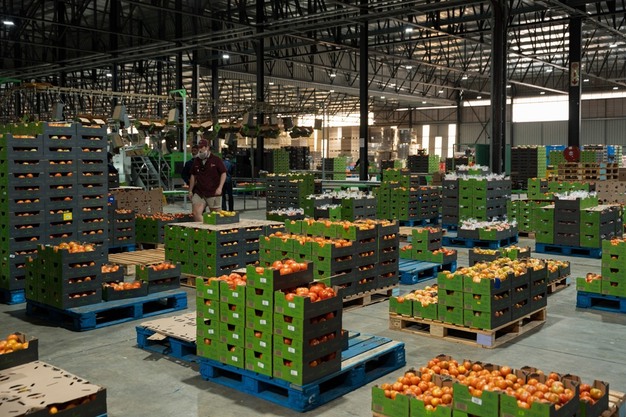
A possible future shortage of citrus packing capacity in the Western Cape is being addressed by the six-lane automatic sizer currently being installed, which will be followed by another six-lane sizer at their cohort Arisa packhouse in Swellendam.
The new pack line, bringing them to three, of which one is a dedicated butternut line, will be dedicated to citrus and stone fruit. Being a multi-commodity packhouse means they can employ staff for eleven months of the year. Building a relationship of trust and recognition is a feature of his new tenure.
 © CAPAC
Optimising chemical treatments for compliance & quality
Jointly owned by ANB Investments and Lucerne Agri Investments, it is connected to four other packhouses within the ANB Group, benefiting from an overarching research and development team that keeps an eye on the postharvest regulatory environment.
"At CAPAC, quality is non-negotiable, and our own stamp of approval is backed by some of the world's most stringent accreditations of major global retailers," he says, adding that their experienced quality control team provides real-time feedback to growers, empowering them to make corrective in-orchard decisions influencing the overall quality of their packout.
Continuous improvement in postharvest practices includes trials of alternative waxes and coatings (UK and U.S. retailers insist on vegan carnauba wax). Sometimes, De Jong says, they are forced to prematurely find at least partial alternatives to legal and effective products: the decision by some EU retailers allowing only 50% or 60% of the accepted maximum residue level, paradoxically, leads to resistance developing among target pathogens.
"Finding an alternative is a time-consuming process. It's no simple task. During this past season, we've had to look at new approaches to counteract the resistance that started building up against one of our postharvest chemicals," he says.
Over the past decade, maximum residue limits have shifted almost annually. "Our team is proactively evaluating alternatives, ensuring that we are prepared should products be restricted or removed. Together with our maintenance teams and chemical suppliers, we are testing application methods, pump specifications, water flow, and chain speeds to optimise dosing accuracy – even where automated systems are in place."
Retailers are not only concerned with the residues, but also with the number of active ingredients present and the combination thereof. "Usually, fruit arrives at the packhouse with around two residues from the orchard, another two that are applied in the packhouse, perhaps one more if the fruit is degreened. That brings you to four or five different active ingredients on the fruit, and many supermarkets don't want more than five actives on a fruit anymore."
For more information: Christo de Jong
CAPAC
Email: [email protected]
https://capac.co.za/