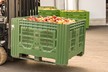
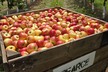
The conflict in the Middle East and the closure of the Strait of Hormuz, a strategic gateway for world trade, are causing major disruption to trade flows. As a result, a number of food shipments have come to a standstill, as is the case with French apples. More than 250 containers, or around 5,000 tons of apples bound for the Middle East (including Dubai and some Asian markets), are currently stuck at sea, with an estimated value of between 7 and 8 million euros [8 and 9.2 million USD].
Added to this situation are the numerous costs applied by shipping companies, linked to the risk of war, including for containers already on the water. "This generates almost €900,000 [1,032,425 USD] in additional costs for France as a whole," explains Sandrine Gaborieau. Added to these extra costs is the question of insurance: war risk cover either disappears or becomes extremely costly.
Faced with these constraints, operators are trying to find alternatives. "Exporters are currently looking at ways to transport their containers, notably via the Cape of Good Hope, but this adds around ten days for journeys to Asian destinations," explains Sandrine Gaborieau.
Consumption is down sharply in the French market
Although it is still a little early to draw up an assessment of the 2025-2026 campaign - March is usually a key month for consumption - the initial indicators are disappointing. To date, consumption has remained down since the start of the season. The phenomenon is affecting a large proportion of fruit and vegetables, with the exception of exotic fruit and bananas, which are faring better. According to Sandrine Gaborieau, "on the January Kantar apple panel, cumulative quantities purchased since the start of the season are 6% lower than last year and 9% lower than the average for the last three years." This is a difficult situation, especially as prices remain high: an average of €2.20 [2.52 USD] since the start of the season.
These price levels have a direct impact on consumption. "Prices are obviously having an impact on consumption, and the war in the Middle East is also causing concern. With the expected rise in energy prices, households will have to make new trade-offs in their spending, to the detriment of fresh produce, which is often used as an adjustment variable."
The trend is similar for French pears. Quantities bought are 8.8% lower than last year and 12.5% lower than the average for the last three years, all origins taken together, with high prices here too, at an average of €3.06 [3.51 USD] per kilo this season. However, there has been a real increase in the number of French pears in most supermarkets, rather than imported pears.
For more information:
Association Nationale Pommes Poires
6 Rue de Lyon, 75012 Paris
Phone: +33 (0) 1 53 10 27 80
Fax: +33 (0)1 53 10 27 88
[email protected]
www.lapomme.org