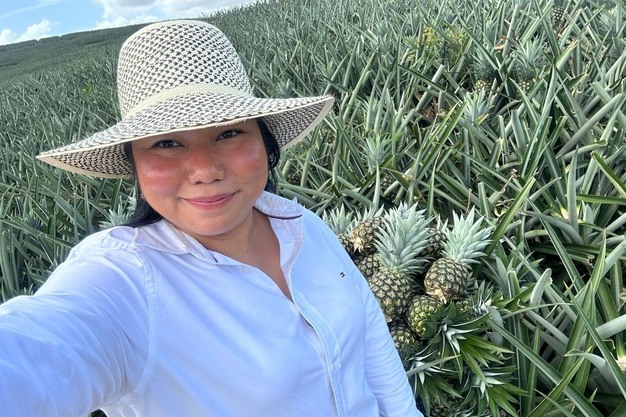
The pace of Panamanian pineapple exports remains stable in 2026, despite significant adjustments in the fruit's commercial destinations due to changes in international demand, reports Kimberly Rudas, representative and owner of Industria 4.0 Panama, which continues to export between four and eight containers per month, in line with last year's volumes.
 © Industria 4.0 Panamá
"The pace hasn't changed. We are working with practically the same volumes," says Rudas, who stresses that this year we should start seeing the effects of the planting in 2025, which was boosted by the opportunities growers saw in a buoyant market. "Everything that is sown is sold internationally, and the little that is left is intended for local consumption."
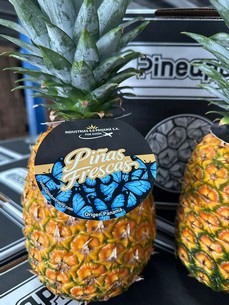 © Industria 4.0 Panamá However, commercial strategies have had to be rethought due to the market's behavior. There has been a drop in the number of orders in Europe, a traditional key destination (especially Spain and the Netherlands), due to price pressure and a greater international supply. "The price of pineapples fell, and profit margins weren't good enough to allow us to ship; furthermore, distributors found it difficult to sell the product," she says.
Faced with this scenario, Panama has started redirecting part of its supply towards new destinations, mainly the United States and Canada. "We are paving the way for some unusual markets for Panamanian pineapple," says Rudas, underlining the growing interest of Canadian companies in signing supply contracts.
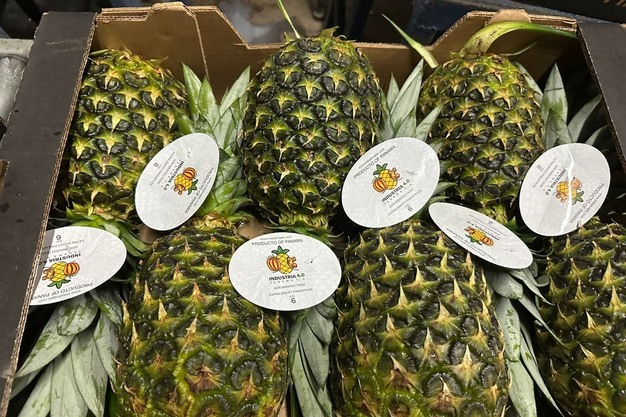
At the same time, specific niches are gaining prominence. Such is the case of the Turkish market, where there's a growing demand for smaller fruit. "Small pineapples used to stay in the local market; now they are highly demanded by Turkey," she says.
 © Industria 4.0 Panamá
On a competitive level, Costa Rica continues to set the trends in the global market. "We will always have to compete against Costa Rica, which triples our production and sets the prices," says Rudas. However, Panama is committed to quality differentiation. "Our pineapple stands out for its flavor and sweetness, which allows us to position ourselves in specific niches."
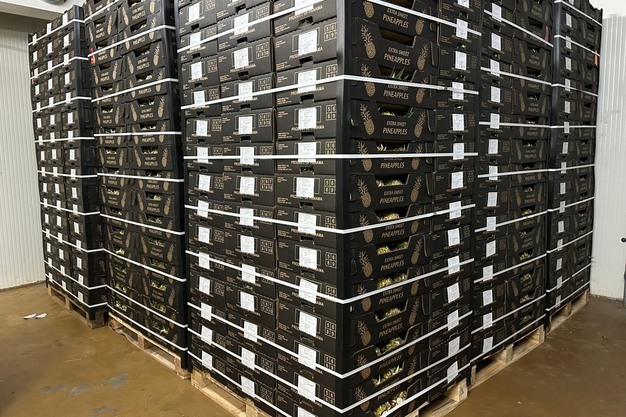
As far as prices are concerned, the market is showing mixed signals. "There has been an upturn in Europe and a greater number of purchase requests," she says, although she also warns that logistics remains one of the biggest challenges. Shipping congestion and lack of equipment are taking a toll on transit times. "Containers may occasionally end up left sitting in the port and not arriving on schedule, which complicates the operation."
 © Industria 4.0 Panamá
On top of this, there's also the increase in production costs, especially for fertilizers. "Urea that used to cost 30 balboas is now worth 36 balboas; this has a direct impact on our costs," she says.
"We are waiting to see how the global situation develops," says Rudas, insisting on the need to invest more in promotion, aiming for Panamanian pineapple to consolidate its presence in international markets.
 For more information:
Kimberly Rudas
Industria 4.0 Panama S.A.
Tel.: +507 6334-8964
[email protected]
www.industriapty.com