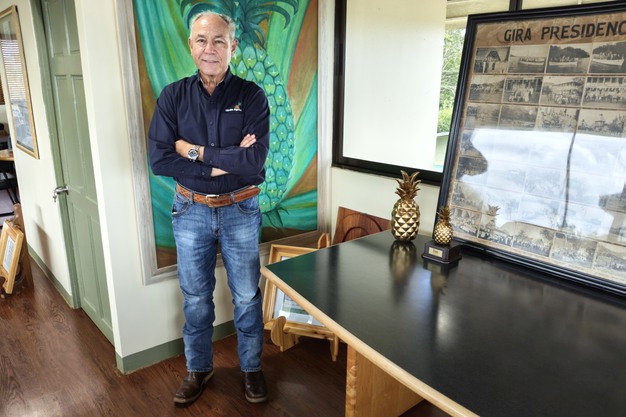
"Quality is everything," says Alfredo Volio, owner and CEO of Upala Agrícola. "Every pineapple that arrives at a consumer's home is just one pineapple. If they try it and it's not good, that will be their lasting impression—even if it was the only substandard fruit in the entire container."
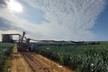
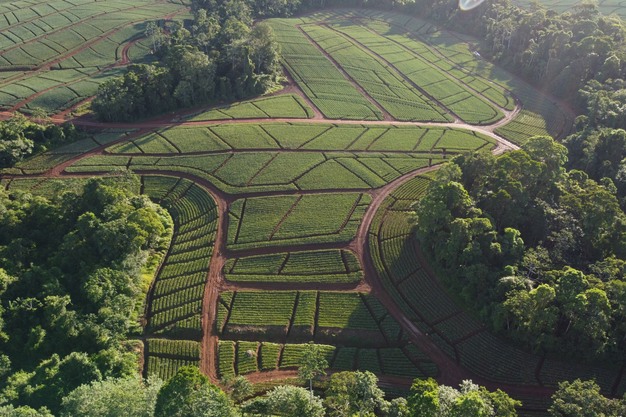
It is a philosophy that has guided Volio since he founded the company 17 years ago with around 200 hectares in Upala, in the far northwest of Costa Rica. Today, Upala Agrícola spans a total of 4,000 hectares, of which 2,000 are dedicated to pineapple cultivation. The rest is given over to forest conservation, wetland protection, internal roads, and buffer zones. A deliberate choice. "We care deeply about sustainability. That's why we set aside a significant portion of our land as protected areas."
 © FreshPlaza
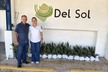
Alfredo Volio, owner and CEO of Upala Agrícola.
Growth has been steady but measured, at 5% per year, always calibrated to market demand rather than productive capacity. "We've grown practically every year," Volio notes. Costa Rica's pineapple industry is itself relatively young—it took off with the introduction of the MD2 variety in the early 2000s—and Upala Agrícola has grown right alongside it.
Global reach, loyal customers
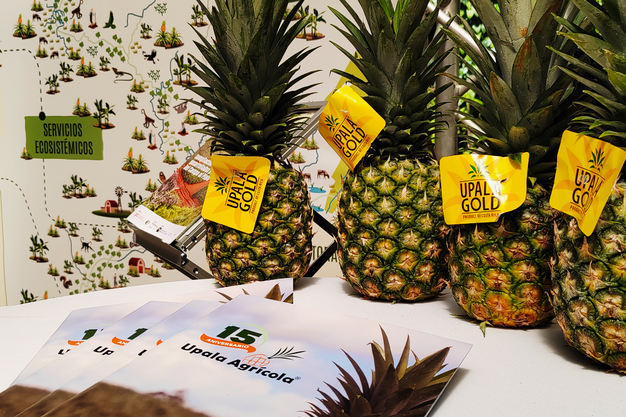
The company ships just over 100 containers a week, adding up to more than 5,000 a year. Around 60% is destined for the United States, with the remaining 40% split between Europe and other markets such as Turkey and Russia. Upala Agrícola has been supplying Walmart in the US directly for 15 consecutive years. In Europe, the product reaches major supermarket chains in Germany, France, and Spain, among other countries, through established importers and distribution networks.
 © Upala Agrícola
A direct logistics presence in Europe is not on the cards. Managing port logistics and maintaining offices there would require an entirely different business model. "We have a stable client portfolio. Very good clients," says Volio. That stability is precisely the foundation of Upala Agrícola's strength and growth.
Not all of the crop makes the export cut. Around 15% of production falls short of the required standards and is sold to juice companies and IQF processors for use in smoothies, ice cream, and yogurt. Volio points out that pineapple juice is the third most consumed juice in the world, behind only orange and apple.
 © Upala Agrícola
The company produces six size categories, with and without crown, and has an external color range of 0 to 2, and has seen demand for crownless pineapple grow steadily. It now accounts for around 15% of exports. "It's one of the categories that has grown the most in recent years, because many retailers are cutting the pineapple and packaging it in plastic containers. It's just so much more convenient for the consumer." As this segment gains weight, buyers are also demanding higher internal quality. It is a trend for which Upala Agrícola is well positioned.
The Upala advantage
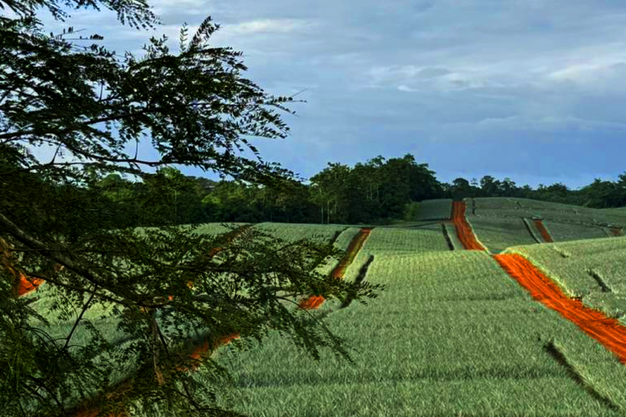
That positioning comes down to geography. Upala receives fewer hours of rainfall and more hours of sunshine than other pineapple-growing regions in Costa Rica, conditions that translate directly into sugar content. "That allows us to produce a pineapple with one of the highest Brix levels of any growing region, if not the highest. It's no credit to us whatsoever: it's pure geography." The average Brix level hovers around 15°. The farm has three weather stations, and the microclimate variation between them—within the same property—is, in Volio's words, like that of "different countries."
Certifications: Necessary, but demanding
Upala Agrícola holds all the relevant certifications in the sector: food safety, sustainability, quality, and social and environmental responsibility. Volio shares the goals but is candid about what they mean in practice. "When you add up all the processes involved in each of these certifications or audits, it turns out that most of them have an enormous amount in common." In reality, a considerable number of working hours go into internal audit preparation, training, and documentation every year.
 © Upala Agrícola
On agrochemicals, the company is on a path of gradual reduction. "We're working to reduce agrochemical use and bring in more bioproducts. Every step we take is very carefully considered, based on analysis and trials." Fully organic production is not a realistic option, but the direction of travel is clear. Volio cites the annual Clean Fifteen report from the US Environmental Working Group, in which pineapple consistently features among the fruits with the lowest pesticide residue burden. "People can rest easy: pineapple is not going to poison you."
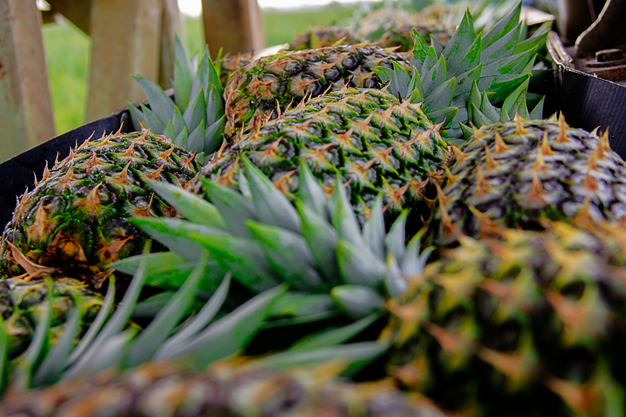
According to the 2026 Clean Fifteen report, pineapple, sweet corn, and avocado top the list this year, followed by papaya and onion. Rounding out the list are frozen peas, asparagus, cabbage, cauliflower, watermelon, mango, banana, carrot, mushrooms, and kiwi. Among the key findings, nearly 60% of Clean Fifteen samples showed no detectable pesticide residues, and only 16% contained residues from two or more pesticides.
 © Upala Agrícola
The labor problem
With 1,200 direct employees, Upala Agrícola is the largest employer in the region. All workers are on the company's direct payroll—no labor contractors, no seasonal migrant workers. "I have never had a single undocumented worker in this company," Volio stresses. Social programs include regular health fairs for workers and their families, open to neighboring communities as well, and ongoing support for more than 20 local schools.
Finding and retaining workers, however, is getting harder. "Young people don't want to work in agriculture anymore. That's just the reality." Exit interviews with departing employees reveal a recurring pattern. "What they tell you is that all they want is to be a TikToker, an influencer, or whatever. It's staggering."
Volio considers this perhaps the single greatest long-term challenge facing the pineapple sector—and, unlike climate change, it is something that can at least be partially influenced. Improving working conditions, expanding social benefits, and making agriculture more appealing to younger generations are all part of the answer. But the trend is real, and there is little sign of it reversing.
Climate, freight, and keeping a cool head
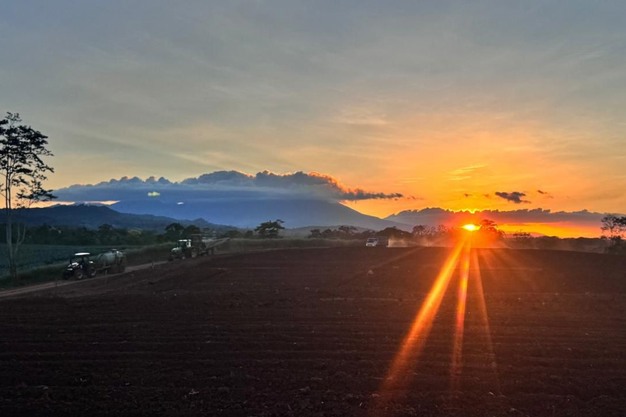
On climate change, Volio takes a pragmatic stance. Weather patterns have shifted—rain falls in the dry season, and drought hits when rain is expected—but the response is adaptation, not alarm. "It's not something you can change or do much about. It's about working as well as you can with the patterns you have. We've been through El Niño and La Niña, and here we still are."
 © Upala Agrícola
Regional instability, including the conflict in the Middle East and disruptions in the Strait of Hormuz, has not so far had a direct impact on the main markets. Shipping companies have started applying fuel surcharges, about which Volio makes no effort to hide his skepticism. "All these shipping lines use whatever is happening in the world as an excuse to push prices up." Container availability, at least, remains stable.
Beyond the harvest
Upala Agrícola is now also turning its attention to what happens after the harvest — specifically, what to do with the pineapple residue left over after each growing cycle. This biomass has real potential for use in biofuels, bioenergy, cellulose, and textiles, and the team is already working with universities and other companies to explore it.
Pilot results on fiber quality and bioenergy applications are promising. The challenge lies in scaling up to an industrial-level operation. "We can generate a very significant impact, not just for this company, but for the entire sector," Volio concludes.
 For more information:
José Madrigal (commercial manager)
Upala Agrícola
Upala, Alajuela
Costa Rica
Tel.: +506 2480 0100
[email protected]
www.upalagricola.com