Over the past five years, Costa Rica's papaya cultivation area has remained around 1,000 hectares and production around 55,000 tonnes. Although export figures fluctuate from year to year, they rarely exceed 5% of total production. On a global scale, the country is a modest papaya producer and exporter, ranking around twentieth in both categories, according to Faostat data. One of the growers and exporters is Green Life, a family business run by Félix Castro Drumond and his son Kevin.
 © FreshPlaza
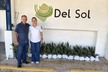
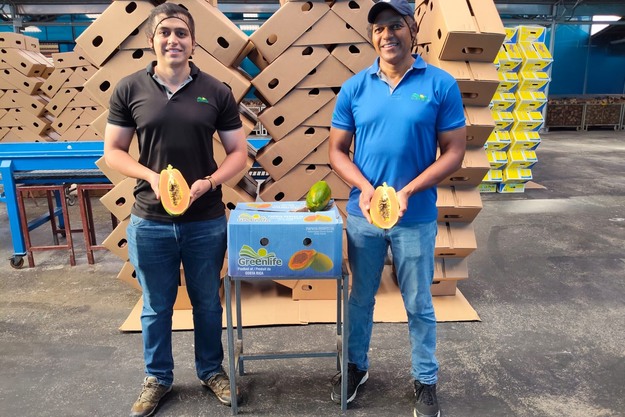
Kevin Castro and Félix Castro, son and father, at the helm of the Costa Rican family company Green Life
One crop, one focus
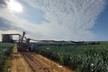
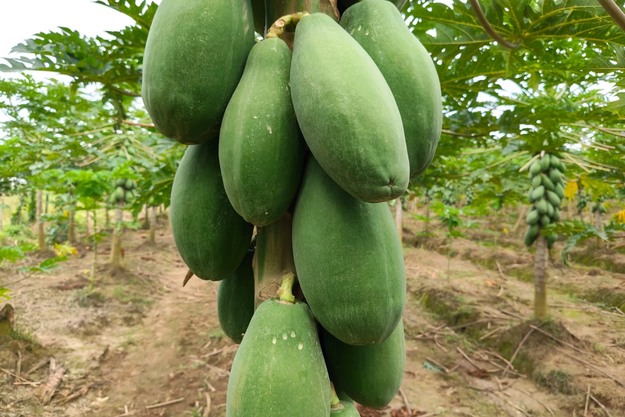
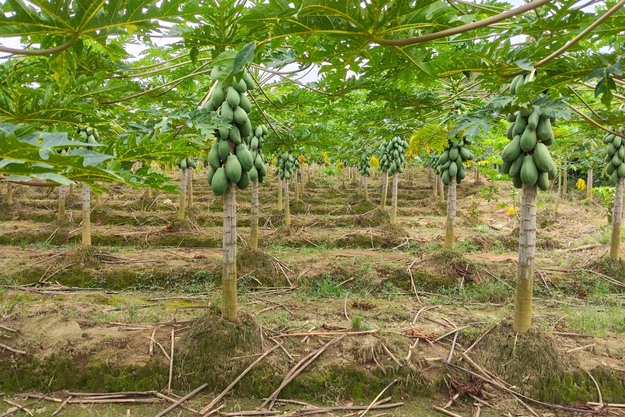
Green Life grows papaya exclusively. No diversification, no side crops, just papaya. The company operates on around 15 hectares of its own land in the Limón province, at the Caribbean side of Costa Rica, planting approximately three hectares every three months in a staggered system designed to ensure a continuous supply. "We have to do it sequentially so we always have papaya," Félix explains. From planting to first harvest takes seven to eight months. Working with allied producers in the region, Green Life can scale up to around 45 tons per week, enough to fill two to three containers. "The potential is there," Kevin confirms.
 © FreshPlaza
A local variety with a claim to fame
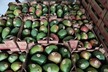
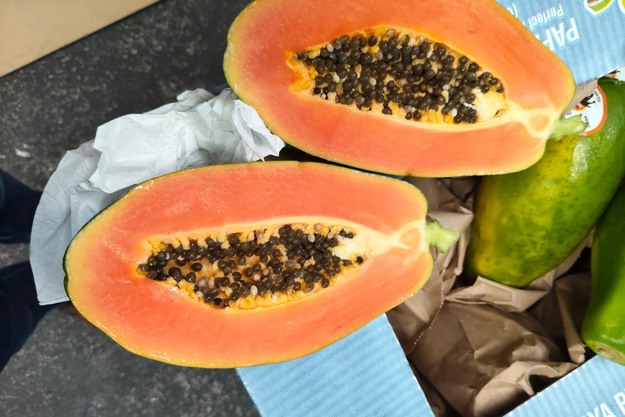
Green Life grows the Pococí variety, a papaya developed locally in Costa Rica. It may not be the largest fruit on the market — boxes of 10 to 12 pieces, each weighing between one and two kilos, are packed in 14-kilo boxes — but according to Félix and Kevin, it more than makes up for that in flavour. "It's not the biggest, but it's the sweetest," Kevin says. Compared to better-known varieties like the Formosa from Brazil, the Mexican types, or the Taiwanese Tainung, the Pococí holds its own. "We have tasted a lot of varieties, and we can say it is one of the sweetest."
Canada first, Europe next
Canada is currently Green Life's primary export market. The company ships its papayas there by sea, arriving in good condition after 20 to 23 days. A first trial shipment to Europe also went smoothly, with the fruit arriving in perfect condition. That shipment was made in a shared container with a pineapple producer from San Carlos — a collaboration that keeps logistics costs manageable.
 © FreshPlaza
Europe is clearly on Green Life's radar. The company is in active talks with potential partners in Spain and has previously attended the trade fair in Madrid. "Our goal is to increase production, increase exports," Félix says. "And to produce better, also to help the people that live here."
Green Life's European ambitions align with broader sector trends. According to dates shared by Procomer, Costa Rican export promotion agency, over the past five years, an average of 63% of Costa Rica's papaya exports went to North America, while Europe accounted for less than 5%. Central American neighbours made up around 30%. There is clearly room to grow westward across the Atlantic.
A niche market with potential
In countries like the Netherlands and Germany, papaya is still largely absent from mainstream supermarkets and sold mainly through ethnic food shops, where communities from Latin America, Africa, and the Middle East are the primary buyers. Spain, with its large Latin American diaspora, is also a strong market. "Good people that are travelling — we see Latinos in every country," Kevin observes. "So the papaya is going with them." As awareness grows and demographics shift, mainstream European demand is expected to follow.
 © FreshPlaza
Certifications: work in progress
For the Canadian market, GlobalG.A.P. certification has been sufficient so far. But Kevin and Félix are well aware that entering northwestern European markets — the Netherlands, Belgium, Germany, the UK — will require additional social compliance certifications. They know Green Life needs to be prepared as standards tighten, even in markets where requirements have historically been less strict.
The challenges of growing papaya
Papaya is an expensive crop — roughly 15,000 dollars per hectare, compared to 3,000 to 4,000 dollars for cassava, another common crop in the region, according to Félix. The fruit is delicate and fragile. "The skin of the papaya is very sensitive," Kevin explains. "We have fungi, we have insects. It's very sweet for the insects to come and cause damage. So we have to take care of the nutrition, all of that makes it very expensive."
The humid climate in their growing region accelerates growth but also creates ideal conditions for fungal disease. "The humidity is too hard here, so the fungi are very aggressive," Kevin adds. To address these challenges, Green Life has partnered with Procomer, which has provided equipment to help reduce water use, improve fungal control, and cut pesticide usage.
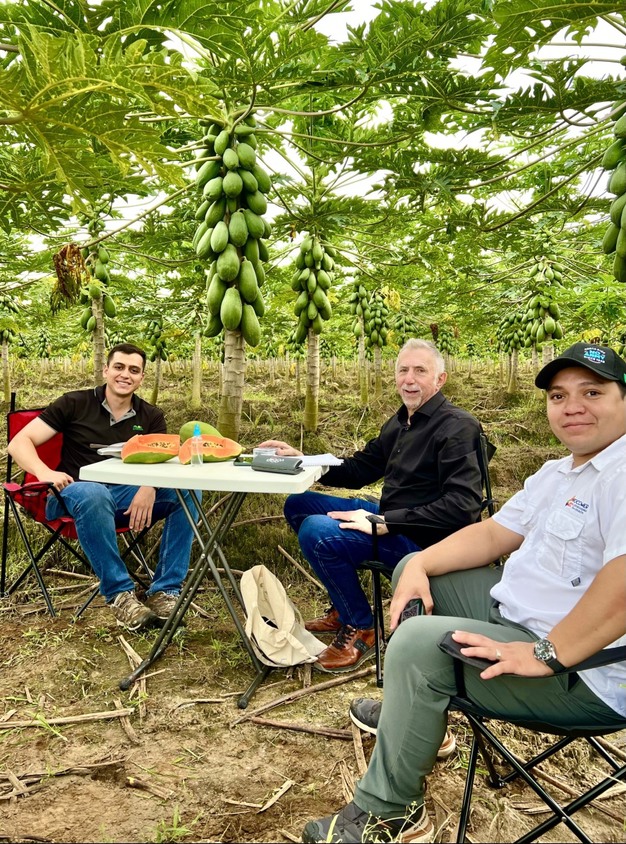 © Green LifeOn the right: Kevin Castro (Green Life), Piet Schotel (interviewer for FreshPlaza), and Alexander Vargas (Procomer)
A labour market under pressure
Finding workers is increasingly difficult. "It's pretty difficult to get people to work here," Kevin acknowledges. Most of those who have been on the farm for decades. Younger generations are heading to the cities, pursuing education or other opportunities. Workers from Nicaragua help fill some of the gap. "The youngest people want to go to the city. They want to study," Félix says. Green Life currently employs five to ten people on the farm and around 25 in the packhouse. To reduce dependence on manual labour, the company is investing in technology. "That's why we're implementing technologies in order not to depend on people, like spraying drones. That's what we're using here," Kevin explains.
Open for business
Green Life is open to partnerships, including investment. "Some companies from Europe can come here — if one makes an alliance, investing in planting for mass production," Kevin says. Their appearances at international trade fairs are part of a broader push to raise their profile.
 For more information:
Félix Castro Drumond
Green Life
Pococí, Limón (Costa Rica)
Tel.: +506 8849-7028
[email protected]