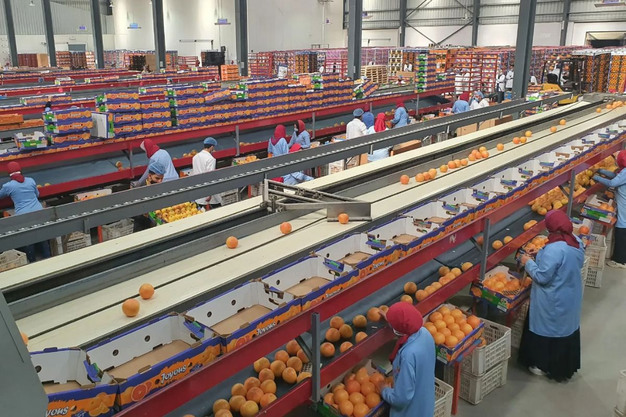
The end of Ramadan has boosted activity at Egyptian farms and packing houses, which are busy fulfilling and shipping orders ahead of Eid vacations. Demand for Egyptian oranges remains strong in several markets, but the sector faces significant challenges, even a "crisis," as described by Ahmed Ghoneim, marketing director at Fruit Link.
The exporter states: "Demand for oranges is very strong, but we are unable to fulfill all orders due to logistical disruptions."
 © fruitlink
Sea routes to Gulf countries are disrupted or even completely closed. Some ports essential for delivering our products, such as Jebel Ali in the United Arab Emirates, are not operational. All exporters are currently relying on road transport, which is putting pressure on carriers and leading to a shortage of refrigerated containers. Demand is particularly strong in Saudi Arabia and Oman, but transportation costs have risen sharply," Ghoneim continues.
According to the exporter, the situation is more concerning in the Asian market. "The resurgence of the crisis in the Red Sea is reigniting issues related to long transit times and the final cost of our oranges. The impact is particularly noticeable in price-sensitive markets, such as India and Bangladesh, where the risk surcharges imposed by shipping companies are making oranges too expensive for consumers. Other markets that are less elastic, such as Malaysia, Indonesia, and Singapore, are less affected," he adds.
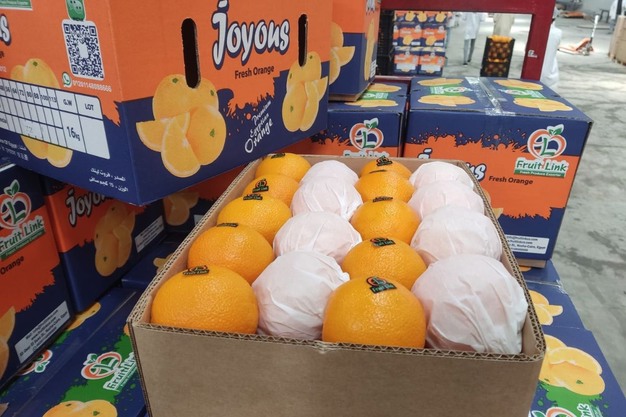
The difficulty in shipping to Asia, including the Gulf, is leading to an increase in supply in other markets. According to Ghoneim, "exporters are turning to all alternative markets without exception, creating a favorable situation for European importers. But exporters are primarily turning to the Russian market, which has import standards similar to those of Gulf countries in terms of size and quality."
 © Fruit Link
"The European market is the least affected under these conditions. We fear that this market will not be able to absorb all the excess volume, especially since production is enormous this season in Egypt, and because this market is also concerned by risk surcharges and higher transportation costs," the exporter continues.
In this difficult situation, the pressure ultimately falls on growers in Egypt. Prices for raw oranges are lower compared to the same period last season. "This is enormous pressure because we're seeing diesel prices and overall production costs rise as the season progresses," Ghoneim concludes.
For more information:
Ahmed Ghoneim
Fruit Link
Tel: +20 11101 16206
Email: [email protected]
www.fruitlinkco.com