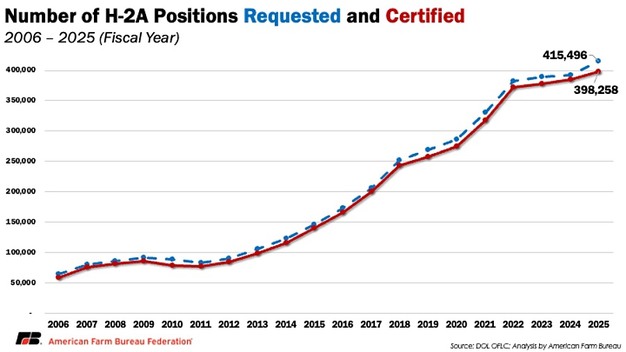
The H-2A guestworker program continued to expand in fiscal year 2025, with 13,358 more positions certified than in fiscal year 2024. For the first time since the program's inception, certified demand approached 400,000 positions, reflecting ongoing labour constraints in U.S. agriculture.
 © American Farm Bureau Federation
H-2A demand trends
Nationwide, 398,258 positions were certified as eligible for H-2A workers in fiscal year 2025. These certifications apply to seasonal jobs for which employers documented insufficient domestic labour availability. Over the past decade, the program has grown by 185 per cent. While growth has moderated in recent years, fiscal year 2025 still recorded an increase of more than 13,300 positions compared with the previous year.
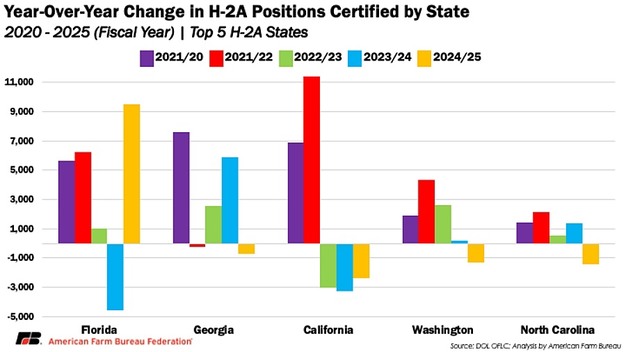
Almost half of all certified positions were concentrated in five states: Florida, Georgia, California, Washington, and North Carolina. Florida accounted for more than 14 per cent of total certifications and added over 9,000 positions year on year, despite a 10 per cent increase in the Adverse Effect Wage Rate during the period. In contrast, the other four leading states all recorded declines.
Outside the top five, most states saw increased use of the program. Thirty-eight states recorded higher certification numbers, including the remaining states within the top ten. Declines were mainly observed in parts of the Southeast and along the West Coast.
 © American Farm Bureau Federation
Application structure and regulation
Recent regulatory changes have influenced how employers submit H-2A applications. Rules such as the disaggregation requirement, which was vacated in August 2025, encouraged employers to separate tasks into multiple job roles, increasing the number of applications while reducing positions per filing. In fiscal years 2024 and 2025, the average number of positions per application was 19, down from 23 in 2018. Additional applications increase administrative costs and processing times. Recent adjustments to H-2A rules allow broader job descriptions within a single contract, which may reduce application volume and associated costs.
Domestic labour availability
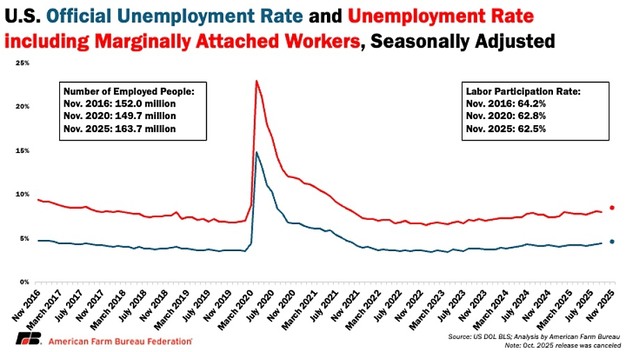
Certification data continues to show minimal domestic participation. In fiscal year 2025, only 182 positions, less than 0.04 per cent of the requested roles, received a domestic applicant. This aligns with broader labour market trends. While the U.S. labour force has expanded by nearly 12 million people over the past decade, participation rates have declined. In September 2025, the unemployment rate stood at 4.4 per cent, slightly above pre-pandemic levels and below the rate recorded ten years earlier.
 © American Farm Bureau Federation
Program scope and limits
The H-2A program remains a primary seasonal labour option for U.S. agriculture, but coverage gaps remain. Certain non-seasonal sectors, including dairy, mushrooms, and greenhouse production, face restrictions under current contract rules. In addition, only around 80 per cent of certified positions ultimately receive visas. Cost factors, including wage adjustments and non-wage requirements, continue to influence participation levels, despite recent revisions to wage-setting methodologies and contract flexibility.
 © American Farm Bureau FederationFor more information:
American Farm Bureau Federation
Tel: +1 202 406 3600
Email: [email protected]
www.fb.org