"We are pleased with the sales performance of strawberries and stone fruit; however, not so much with pears," reports Ettore Ceccarelli from "Ceccarelli Giulio" in Longiano (FC), owner of the Julius brand. His analysis covers the spring-summer market, with a look also at the first weeks of the autumn products.
"Let's start with spring: the desire for novelty already in February caused strawberry consumption to take off and remain high until early June. Thanks to the different production techniques - plugs, fresh and cold-stored plants - we can now speak of a 'strawberry campaign' that extends over seven months, from November to June. The verdict is therefore positive."
 © Ceccarelli
As far as apricots are concerned, the drop in production in some areas (Basilicata, Emilia-Romagna) in the early phase was partly compensated for by new plantings in Campania and Puglia. Consumption was satisfactory, particularly for the varieties with a high Brix level, as were the sales.
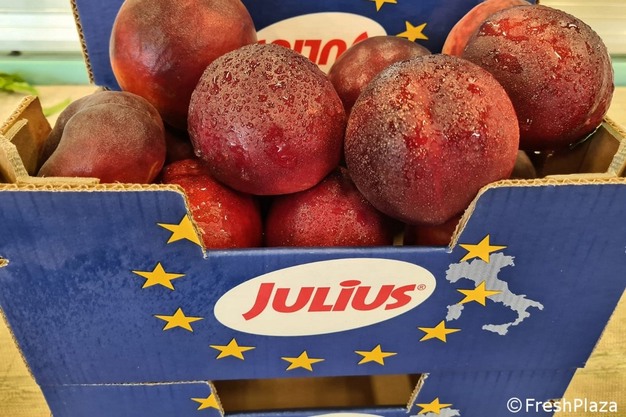
"Peaches and nectarines alternated between low availability (May and June) and overlaps (August) between Emilia-Romagna, Spain, and Piedmont. This led to a fall in prices, but consumption remained constant. The varieties currently in production are sweet and affordable, and the warm weather has favoured the consumption of a fruit that, despite being a commodity, is easily found in different packages and sizes. In some periods, the rain favoured the development of fungal diseases, sometimes forcing promotional sales, but demand never stopped - unlike apricots, which struggled after 15 August," Ceccarelli points out.
 © Ceccarelli Giulio Srl
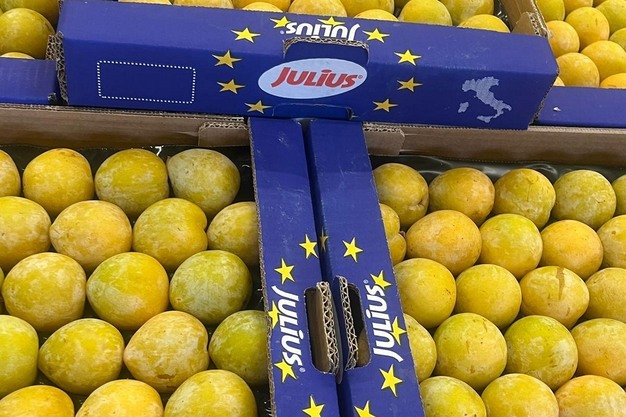
As for plums, production was low in the North in June, July, and August, but this was compensated for by Campania, where high-quality fruit was harvested, including traditional varieties such as Goccia d'Oro, TC Sun, Fortuna, and Santa Clara. Angeleno arrived in September and, despite early warnings about low yields, production turned out to be decent. The real trend in consumption still remains to be seen.
"There is a lot of talk about trademarks, patents, and varietal clubs even for summer products. These are undoubtedly useful tools to support the supply chain, provided that the revenues are actually redistributed. However, when fruits are found on sale at € 4.99 or even € 7.89/kg, purchases tend to become rarefied. At that point, good and affordable 'basic' peaches, nectarines, plums, and apricots come back into the limelight, continuing to ensure rotation. The crisis is making itself heard when it comes to food spending: those who can indulge in blueberries or mangoes shipped by air, while those who are more budget-conscious often give up on buying fruit and vegetables."
And what about pears?
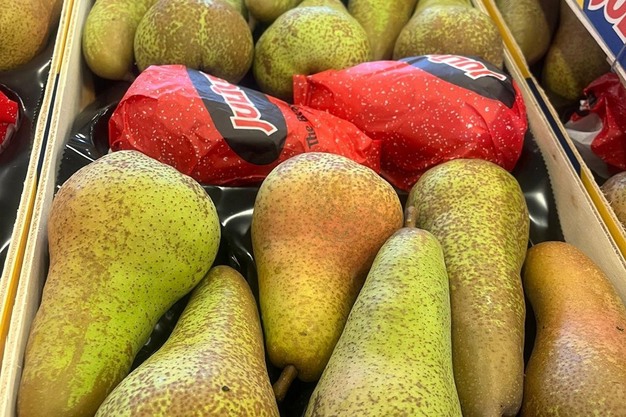
"Pears are close to our hearts. But it is hard not to notice how consumption is dropping. Sales were slow in the spring, meaning that imported pears are still on the market: I saw Chilean Abate pears in the shops until 31 August, and South African Kaiser pears until 15 September. Even now, with the arrival of the domestic product, purchases are rather calm. We can talk about the prices of origin being too high, or the hot weather not stimulating consumption, but perhaps - and I say this with bitterness - the real cause is that consumers are no longer confident when it comes to pears."
 © Ceccarelli Giulio Srl
'When the pears purchased have not been good enough to eat for months - as reported by many customers - it is understandable that people give up on buying them. Why take the risk? It is still too early to draw any conclusions, but, at the moment, pear sales remain slow while they continue for plums, nectarines, table grapes, and other summer fruits...," he concludes.
For more information
Ceccarelli Giulio Srl
Via della Frasca, 7
47020 Longiano (FC)
+39 0547 53055
[email protected]
www.juliusfruit.it