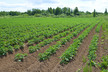
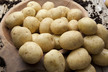
The TRIP (Transformative Reduced Input in Potatoes) project, a three-year research initiative focused on developing sustainable methods for potato cultivation, is now in its final year. The project aims to reduce the use of inorganic nutrients, fungicides, herbicides, insecticides, and energy while minimising greenhouse gas emissions such as carbon dioxide (CO₂) and nitrous oxide (N₂O).
During the 2024 growing season, more than 5.8 million environmental data records were collected using sensor-based technology. Measurements included air temperature, light intensity, CO₂ levels, atmospheric pressure, humidity, and N₂O emissions. These datasets will be used to assess correlations with environmental conditions and identify scalable farming techniques that support reduced-input agriculture.
 © TRIP
The sensor systems, deployed across three farm sites in the UK, were in operation for a combined 3,240 hours per device during the 2024 season. A total of 55 sensor units were used in the trials. The technology was also enhanced during the project to enable the measurement of N₂O emissions directly from the soil.
In a further development this year, the project team introduced a self-powered gateway for the live streaming of environmental data via 4G roaming. This upgrade allows researchers to access real-time environmental measurements, supporting more timely analysis and decision-making.
The TRIP project is a collaboration involving Dyson Farming Research, Emerald Research, Bangor University, the James Hutton Institute, and Light Science Technologies, a company that specialises in controlled environment agriculture technologies. The final results of the project are expected to be shared later this year.
 © TRIPFor more information:
TRIP
Email: [email protected]
www.triptrials.co.uk