The Limalexia strawberry variety's 2018 introduction was received with great public interest. At that time, it was the Limgroup's strawberry program's first breeding variety. It's been barely two years since its official unveiling at expoSE in Karlsruhe, Germany. This strawberry variety's acreage has, however, grown noticeably. The Limalexia has convinced many growers in Northwest Europe too. We spoke to Andreas Thien - a strawberry farmer in Ermke in Northern Germany - about his experiences so far.
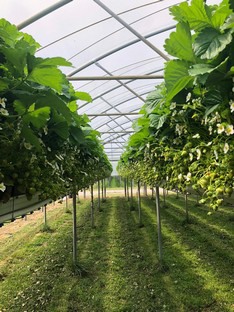
Thien outlines the developments at his company. The Limalexia's advance began there in 2018 with a small-scale cultivation trial. In the next season already, about 75,000 plants were planted. Today, the company houses no fewer than 450,000 of these strawberry plants. That's almost a third of the total cultivation capacity. "At the time, we were looking for a hardy strawberry plant. It had to be as tasty as the Elsanta. It also had to generate a high yield. Early varieties are less relevant to us. More important is a high yield per m2."
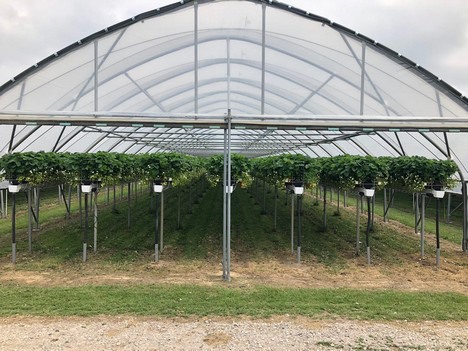 At the Thien nursery in Niedersachsen, Germany, strawberries are grown exclusively in tunnels. The Limalexia's planted and picked in two phases. It's, therefore, available from the end of May until mid-November. In addition to the Elsanta and Limalexia, the farm grows smaller volumes of Opera, Malling Centenary, and Falco strawberries too.
Fertilization schedule
The results have, so far, been very promising, reports Thien. The current season is still in full swing at the company. He is, therefore, cautious about a definite balance. "Last year, the fruits were a little fragile after harvesting. We spoke to Jos Aben, the product specialist at Limgroup, about it. We then adjusted our fertilization schedule slightly."
"This season's initial results look much better," says Thien. The strawberries' growth is also closely monitored throughout the cultivation season. Every fortnight, they send a leaf sample to the laboratory. Based on these results and the accompanying advice, the fertilization plan's adjusted, where necessary.
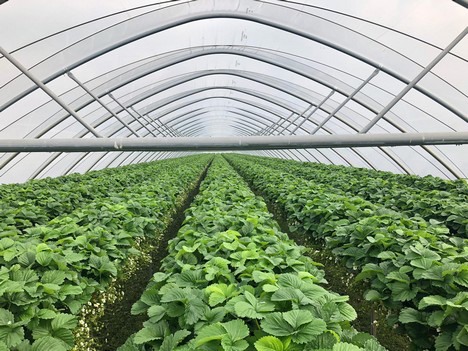
A peek into the strawberry tunnel.
Covered cultivation
The Tien family business is an independent cultivation and trade company. A few years ago, management decided to switch entirely from full soil to covered farming. Today, the area comprises about ten hectares of tunnel cultivation. "Say both crops were to be planted at the same time. Then, the Limalexia would be ripe and ready to pick around six days after the Elsanta. This year, we harvested the first of the Limalexia on 20 May. Based on current predictions, we can keep picking until mid-November. That's to say if heavy frost doesn't upset the apple cart," Tien says about the season's further course.
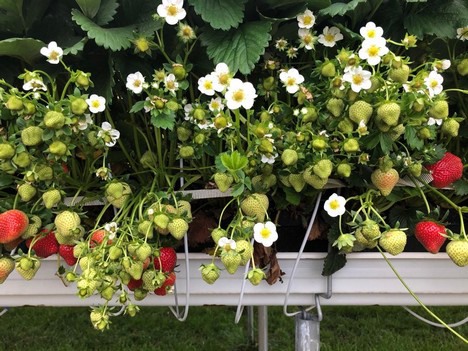
Limalexia plants on shelves
The farm's own strawberries are mostly supplied directly to regional retailers. There's much to say about the Limalexia from a market perspective too. "I think the Limalexia has a lot of potential. We must just coordinate fertilization well," Thein concludes.
For more information:
Thien Erdbeerhof
Andreas Thien
5 Roggenkamp
49696, Ermke, Germany
Tel: +49 (0) 447 594 7024
Fax: +49 (0) 447 594 7026
Email: [email protected]