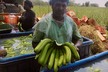
The Colombian banana sector is starting to overcome the crisis caused by the detection of the Fusarium pest in one of the country's plantations in the summer of 2019, leaving behind the fear that international markets will close their doors to Colombia's banana and plantain exports.
In the last four years, the banana production area grew by 6.1% reaching 93,565 hectares and reaching a yield of 18.70 tons per hectare. Thanks to that, the sector's producers exported more than 100 million boxes of 20 kilos worth almost 900 million dollars last year.
Banana producers have requested to avoid creating panic because -despite the confirmation of the fungus in the crops- consuming the fruit poses no danger; in addition, because the country is preparing to increase its export level year by year.
The president of Asbama, Jose Francisco Zuñiga, said that Colombia was working to introduce bananas to the Chinese market. Nowadays, the country sends small quantities of bananas to that market, but exporters will soon get the green light to do it in a massive way. China is an important market as it imports 900 million dollars in bananas a year, 150 million of which come from Ecuador. If Colombia reaches an agreement to increase banana exports to the Asian giant, producers expect the sector would finally surpass the 1 billion dollars in exports.
Currently, Ecuador is Colombia's main competition among the regional countries that are exporting to China. Ecuador, just like Colombia, is one of the few countries whose fruit has seals that give it added value, and that allows them to keep prices between 7 and 8 dollars per box.
Until Colombia consolidates the Chinese market for its banana exports, the sector will continue to depend on its main customers, which are Belgium, which buys almost 600,000 tons per year, followed by the United States and Italy with almost 300,000 tons acquired, each.
During 2019, after the Fusarium was detected in the country, banana producers from different regions of the country had to devote part of their time to address consumer concerns. They also had to review existing trade agreements, some of which had been recently signed and other future agreements that were influenced by international geopolitical issues, such as the agreement with the United Kingdom that is conditioned by the Brexit.
Source: agronegocios.co