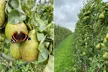
Researchers at the University of Kentucky are studying non-invasive ways to improve detection methods for the codling moth in apples. Codling moths are the most devastating insect pests of apples. Each spring, adult moths lay their eggs on or around developing apples. When the eggs hatch, the larva, or worm, tunnels into the apple, where they feed on the fruit and develop for three to five weeks. Then they exit the fruit to pupate in a nearby location over the winter.
As the world’s largest exporter of apples, U.S. apple growers can experience huge profit losses from a codling moth infestation. Many countries have strict laws related to insects and will not accept codling moth-infected apples. If an inspector finds one infested apple in a shipment, it can reduce producers’ profits by more than 50%. In recent years, incidences of codling moth findings in U.S. apples have increased by 276%.
A team led by Akinbode Adedeji, assistant professor in UK’s College of Agriculture, Food and Environment (CAFE), plans to develop a way to quickly and noninvasively identify moth-infected apples. Their project is funded through a nearly $475,000 grant from the U.S. Department of Agriculture’s National Institute of Food and Agriculture.
Source: uknow.uky.edu