Chile’s pear production is currently experiencing steady numbers, but the volumes are expected to decrease in the following years. This is due to the lack of profit to be made from the top fruit, as compared with other fruits, specifically cherries. Franco Rivera, the sales manager of Frutasol in Latin America, says: “On average, growers can get much higher prices for cherries than for pears, prices that are about four to five times higher. So, many growers are decreasing their pear volumes in favor of cherries.”
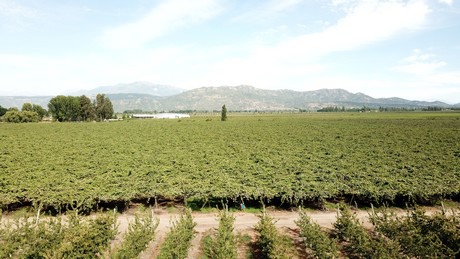
Chile harvests and exports their pears from January and February to June and July, and this coming season they are expecting steady volumes: “Currently the trees are in their flowering stage, so we can’t make an accurate estimate of the coming volumes yet, but it will likely be somewhere between 20-30 containers full for Frutasol. We are now entering the spring season, but our winter has been very dry and we had very low amounts of precipitation, that will have an impact on volume and fruit sizes. Hopefully, the rains will not come late this spring because that could be very damaging to our crop. There have also been some cold air masses which could negatively impact our orchards. Our company is working hard on innovating so that we can continue to produce quality products in the midst of a changing climate,” says Franco.
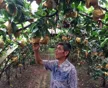
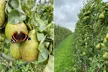
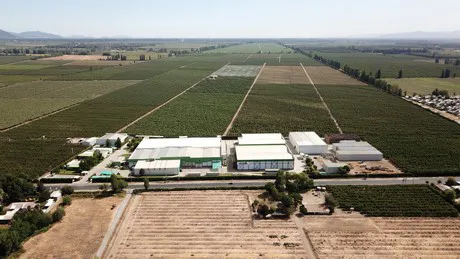
Frutasol is located in the 7th region of Chile, in Curicó, which is a major pear-producing area. The company focuses mainly on apples, but they have also three varieties of pears: the Red Bartlett, the Beurré Bosc and the Summer Bartlett. The Summer Bartlett variety is sold to liquor producers, but the Red Bartlett and the Beurré Bosc are sold fresh for consumption. Franco says: “The Red Bartlett doesn’t have a very long shelf life so we have to process and sell them right after harvest. Our main markets for this variety are in Spain and Germany, as well as some other European countries depending on the year, and in Ecuador there is good demand for these as well. The Beurré Bosc is sold mainly to the U.S. but also in Latin America. This past season the U.S. had good demand for the Bosc but then they stopped importing them in the middle of our season. Fortunately, we were able to find buyers in Latin America and we were able to sell the rest of our supplies there.”
Chile’s main competition for pears comes from Argentina. “Argentina produces really high volumes and has many more varieties than Chile. Chile is more traditional with their varieties: here we produce Forelle, Packham, Bartlett; the classic varieties. Argentina has more novel varieties and the buyers are very interested in these. If Argentina is in the same market as us they will render our supplies negligible because they produce such high volumes,” Franco explains.
While pear volumes are decreasing in Chile, Franco remains positive over the future of Chilean pears. He explains: “The Chinese market has also opened up for Chile this year and the inclusion of this market will be important for the producers and the exporters in the short term. This may change the prices and shift the current markets for our pears, making it more attractive for the producers to sustain or even expand their orchard. The pear market in Chile used to be bigger, but the annual volume has been decreasing lately. This trend will likely continue on for a few more years, but this will stabilize the market in Chile. There will be less product available so the demand and the prices will go up. In the future, we will have lower volumes, but higher returns for the producers and this will help sustain the market,” concludes Franco.
For more information:
Franco Rivera
Frutasol
Tel: +56933943833
Email: [email protected]
www.frutasol.cl
Marco Dürbeck
Frutasol
[email protected]
www.frutasol.cl