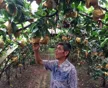
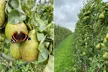
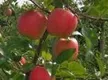
According to estimates, there are more than 20,000 varieties of apples, nearly 7,500 of which are trademarks in constant evolution in search of new mutations. "It is the most widespread fruit worldwide. Apples are produced on all five continents. At certain times of the year we have come to gather varieties from New Zealand, Japan, Magadascar, Chile, and different parts of Europe. We had something from five continents," said Luis Pacheco, the owner of the Gold Gourmet grocery store.
According to Mercasa's Annual Report, apples (with about three million tons) accounted for 9% of the total volume of fruit sold in Spain in 2017. "It is a fruit of great beauty and its very tempting for all ages. Its color, taste, and texture make it irresistible. It is a very attractive product that can be consumed anytime and anywhere," the public company that specializes in the wholesale distribution of fresh food stated.
Powerful producer
Spain is one of the biggest producers of apples in Europe. 85% of national production is concentrated in Catalonia, Aragon and La Rioja, although there is also a large production in Castilla y Leon, Navarra, and the Valencian Community. The sum is almost half a million tons, not counting the one that comes from abroad, mainly from France and Italy. Two years ago, Afrucat (the Fruit Business Association of Catalonia) reported that practically fifty percent of the apples consumed in the country was imported, but according to estimates now only 30% of them are imported. The exact figure, however, varies constantly given the changing taste of Spanish consumers.
"We no longer work with the same varieties as when I started in this job three decades ago," Pacheco said. "Before they consumed a lot of Green Maiden, Reineta, and Golden, which still have demand. But others, which used to have a demand, such as the Rome Beauty, which was cultivated in Aragon, are practically extinct," Pacheco added. At present, the Golden variety is still the most appreciated apple by Spanish consumers, followed by the Fuji, Starking, and Reineta varieties.
Another virtue that apples have is that they resists grafting very well; as a result, there is a constant search for new varieties. "We keep in constant touch with experimental centers around the world," said Fabio Zanesco, the commercial director of the Horticultural Cooperatives Association of Val Venosta. Last season they launched the Yello variety, and in 2019 the Natyra and Bonita varieties will hit the market. "We are investing in innovation and technology to differentiate ourselves, because the market is going through a complex situation. There is a general overproduction. Many traditional varieties are becoming commodities [products without a differentiating feature], making it difficult to obtain good results. It is time to change and one has to know how to adapt," he added.
Present all year
In autumn, consumers get apples that have just been harvested. The apple harvest lasts six months, but the fruit remains in stores all year round. In the past, the apples were stored in straw to preserve them, but now they are kept in controlled atmospheres after being collected and cleaned. This prevents them from having contact with oxygen and carbon dioxide, since it is a climacteric fruit: once collected, it matures and generates ethylene, a gas that equally expands its fragrance throughout the room and that rots nearby fruits.
This year, the average price of apple has increased, and some varieties, such as the Golden, which is very attractive for markets such as Italy, has achieved record prices. "The apple is an accessible, affordable fruit, that can be easily purchased. When I hear that an apple is expensive I think about the terrible floods that have affected Catalonia, Navarra, or Aragon... One kilo costs 2.50 euro, about 60 cents a unit, and yet we say it is expensive. But then we have a coffee for one euro and leave a tip. We have to be more aware and value our apples," Pacheco concluded.
Source: elmundo.es