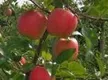
As the US apple season comes to a close, the University of Maryland is releasing its first ever new apple variety called the Antietam Blush, with six more varieties coming soon. They are all adapted specifically to the climate and growing culture of the mid-Atlantic region.
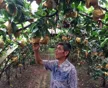
Dr. Christopher Walsh, professor in the Department of Plant Science and Landscape Architecture, received the University’s first-ever apple patent for Antietam Blush. This and the six more varieties of elite dwarf apple trees forthcoming out of the Maryland Apple Tree Architecture Project represent the culmination of 27 years of research and breeding.
The trees are resistant to disease, shorter, with stronger tree architecture for easier maintenance and harvesting. Furthermore they are more cost effective, with the ability to plant more trees in a small area. These advances create potential for broad adoption and use, while improving orchard and farm viability and strengthening the apple industry.
“In Maryland, we have a very good climate for apple production, but we also have a couple of limitations because of our hot summers and rainy weather,” says Walsh. “One day they're green. The next day they fall on the ground. We needed [varieties] that were heat tolerant. We also needed things that fit into the climate and didn't require spraying for a particularly bad bacterial disease called fire blight. That did not exist when I started this program.”
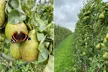
The Antietam Blush can also be grown as smaller trees planted closer together, and completely without trellising or additional support. This not only means that more trees can be grown and more apples can be produced, but that expensive trellising and support systems don’t have to be installed - the trees support themselves and need very little pruning. Not to mention, they are the perfect size to harvest every apple on a step ladder at best, perfect for pick-your-own.
Interestingly, the entirety of this apple program came about completely naturally and without initial external funding. The Maryland Apple Tree Architecture Project really sprung forward in 2007 when Julia Harshman, a former student of Walsh’s and co-inventor, came into the picture. She saw the thousands of trees and immediately started taking inventory and getting rid of anything that wasn’t fruiting and didn’t have have the desired disease resistance or tree architecture.
Prweb.com quoted her as saying: “Most breeding programs, it's not what you keep, it's what you discard, and there's always a fear that you might have made the wrong decision. That's something that Dr. Walsh and I spent a lot of time being very deliberate about, what we got rid of."