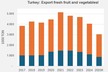
Between January and June 2017, 15.4 thousand tonnes of fresh vegetables and 15.1 thousand tonnes of fresh fruit were exported by Bulgaria; 2% more and 27.9% less, respectively, compared to the same period of the previous year.
The greatest contribution to the increase in the total export of fresh vegetables has been that of tomatoes, with shipments more than doubling in a year and reaching 4.2 thousand tonnes. Increases have also been recorded in the case of garlic, peppers, potatoes, cabbage, pumpkins and aubergines, from the 19.3% of garlic to the more than 2.5 times of aubergines.
Meanwhile, the export of leeks, cucumbers, mushrooms, onions, carrots and turnips has fallen by between 20.1% and 88.4%, with the most significant drop being recorded by mushrooms.
The decline in total fresh fruit exports in the first half of 2017 is mainly due to a decrease in the export of watermelons (2.2 thousand tonnes, -42.3%), apples (2 thousand tonnes, -98.1%) and citrus fruits (1.9 thousand tonnes -21.9%). This also includes the re-export of products not grown in Bulgaria.
A significant decrease was also observed in the export of melons, down 86.6%, and grapes, down 55.5%. At the same time, exports of cherries, nuts, strawberries, sour cherries, peaches and apricots grow by between 7% (in the case of cherries) and more than twice (in the case of apricots).
Source: fermer.bg