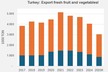
In the first four months of 2017, Bulgaria exported 11.7 thousand tonnes of fresh vegetables; 32% more than in the same period of 2016, according to data from the Ministry of Agriculture, Food and Forestry. Meanwhile, the volume of fresh fruit shipments is reported to have dropped by 15.4%, with 8.7 thousand tonnes exported between January and April.
Among the main vegetables, a significant annual growth was observed in the export of peppers, cabbage, pumpkins, tomatoes, potatoes and aubergines. Pepper exports almost doubled, while aubergine shipments increased by nearly four times.
Onion exports grew by 40.2% and, at the same time, exports of garlic, cucumbers, mushrooms and carrots fell by between 9.6% and 83.2% compared to the same period in 2016, with the most significant decline being recorded by carrots.
The reduction in the volume of fresh fruit exports in the period from January to April 2017 compared to the same period of 2016 is mainly the result of the smaller volume of citrus fruits, kiwis and bananas shipped (re-exports).
Also, compared to the first four months of 2016, exports of quinces, grapes, strawberries, plums, pears and apples fell by between 24.2% and 76.7%. At the same time, exports of melons, blueberries and apricots increased, reaching 9.9 tonnes, 16.5 tonnes and 91.9 tonnes, respectively, while those of nuts grew by 43.3%.
Source: fermer.bg