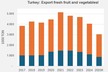
The total volume of exports to non-EU destinations increased by 74%, to 64.9 thousand tonnes. Behind India, the second and third most important destinations for Bulgarian exports are Turkey, with 9 thousand tonnes, and the United States, with 6.9 thousand tonnes.
Meanwhile, Bulgarian exports to EU countries in 2016 increased by 14.7% compared to the previous year and amounted to 190.8 thousand tonnes. The most important destination within the EU is Romania, which imported 44.7 thousand tonnes, followed by Greece, with 30.7 thousand tonnes, and Germany, with 27.5 thousand tonnes.
As for imports, in 2016 Bulgaria imported a total of 712.4 thousand tonnes of fruit, vegetables and food. About 60% of this came from neighbouring countries.
Traditionally, Bulgaria's most important supplier is Greece, with 224.8 thousand tonnes; nearly 18% of the total, although a noteworthy growth was recorded by Poland, which supplied 60.2 thousand tonnes (+40%), mainly due to the increased supply of apples, tomatoes and mushrooms.
Imports from third countries amounted to 269.8 thousand tonnes, with goods coming mostly from Turkey (121.2 thousand tonnes) and Macedonia (50 thousand tonnes).
In 2017, Bulgaria's fruit and vegetable imports continue to grow. When looking at the first three months of the year compared to the same period of 2016, vegetable imports have grown by 32.2%, while fruit purchases have recorded a 12.7% growth, according to the Ministry.
Source: trud.bg