Italy could become a point of reference for the Mediterranean basin, but only if businesses and diplomacy work together to achieve the same goal. This was discussed in Cesena during the "Il ruolo dell'Italia nelle geopolitiche del Mediterraneo e le opportunità per il nostro sistema economico" convention (The role of Italy in Mediterranean geopolitics and opportunities for our economic system) organised by Centro Studi Melandri and Confindustria Forlì-Cesena at the Scienze degli Alimenti campus.
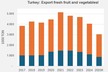
"Italy has the potential of holding a position of leadership in the Mediterranean area with greater profits than Spain, France and Greece. Large powers such as US, Russia and China are focusing their interest on the Mediterranean and fresh produce plays a strategic role," explains economist Gianluca Bagnara.
According to Bagnara, Italy should adopt the strategy of the Netherlands, i.e. work as a triangular trade platform for fresh produce. "But we need to be highly organised for it."
The convention was held at Villa Almerici in Cesena, headquarters of Campus degli alimenti, University of Bologna
All south Mediterranean countries need fresh produce at least 3 months a year, i.e. when temperatures don't make cultivation possible. According to Bagnara, Libya will go back to being stable in a few years' time while, in Egypt, large parts of the population have enough income to buy high-quality produce despite the currency devaluation.
"But diplomacy is just as important as being well-organised. Agreements are made on a political level first. In addition, businesses must work together rather than focus on speculation."
Enrico Granara (Ministry of Foreign Affairs), Francesco Capozzi from the University of Bologna and European MP Damiano Zoffoli also intervened.