According to recent figures, more and more farmers are turning to foreign "guest workers" to plant and harvest their crops in the United States.
Farmers have to get permission from the U.S. Department of Labor to bring in foreign workers, using a category of visa called H-2A. During the first three months of 2017, the Department of Labor approved applications to fill 69,272 farm jobs with workers on H-2A visas. That's up from 50,887 positions approved during same period a year ago, an increase of 36 percent.
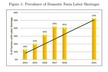
The H-2A visa program has been growing steadily in recent years, mostly because farmers have had increasing difficulty recruiting enough workers here in the U.S. Previous increases, though, ranged from 10 to 20 percent per year, far short of the big jump so far in 2017.
Employers say that the big jump in H-2A applications is partly because the worker shortage is getting worse. But it's also because farmers who hire lots of workers — and the workers themselves — are worried about the Trump administration's tougher enforcement of immigration laws. Many farm workers who live in the United States are citizens of Mexico or Central American countries and don't have legal authorization to be in this country.
Foreign temporary workers still account for a small portion — perhaps 10 percent — of the workers who tend the country's crops. But their importance is increasing rapidly and could reach 20 percent in the near future, according to some experts, such as Philip Martin, an emeritus professor at the University of California, Davis.
source: npr.org