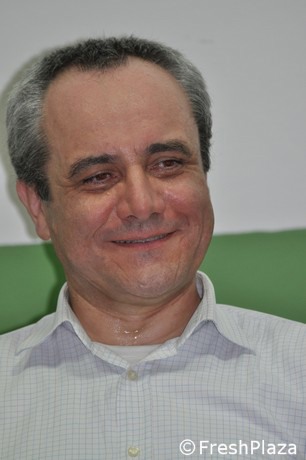
 This is how Gianluca Bagnara (in the photo) explains internationalisation. Many talk about it but very few are able to assess its impact, especially in the near future.
"I have relations with various governments across the globe and what some countries are asking for is an approach that interests the entire chain. I'll make an example: I was in Congo for a convention involving political and economic authorities as well as entrepreneurs. At the end, I talked to an Israeli who told me he was the manager of an investment fund. He was there to develop an economy with a Dutch partner selling Italian technology. At the moment, we're nothing but technology suppliers, we aren't able to enter the economic mechanisms."
"The future is in Africa. By working together, out companies should export the entire chain to produce on two levels - at low cost for the lower classes and at a high level for the richer ones. There are no alternatives, one cannot think to produce/export only for the rich. This is why I talk about chains and integration. In Congo, selling South African nectarines exported by air at €15/kg is normal. Where are we? We're still only sending trucks to Germany."
"China is quickly passing from a Medieval agricultural economy to something so advanced 90% of our companies cannot afford it. They are investing billions. You can't compete, you need to work with them to supply them with what they're missing."
"Agreements are changing a lot on an international level. General strategic ones are diminishing in favour of bilateral ones. The problem is that, in Italy, there are too many interlocutors, which hinders operations as well as the chance to improve trade."