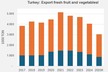
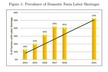
As a result, European fruit and vegetable suppliers have turned their gaze towards the Asian market. The Poles have been sending apples to China and Belgium is exporting its pear varieties.
There is no doubt that suppliers from the southern hemisphere and the United States are ahead in Asian market, but Europe is trying to catch up.
To achieve this goal, in 2017, Europe must overcome the following obstacles: establishing market access agreements, avoiding an overlap with the Chinese production season and developing a more in-depth understanding of the Asian market.
Guangzhou's import market, in the South of China
European exporters think that they will be able to achieve a large volume of exports to Asia as long as they can reach an agreement with major Asian retailers.
However, this approach does not always work because, in Asia, bulk imports of goods are usually dominated by importers, rather than by retailers. So, Europeans must make the appropriate strategic adjustments
Although imported fruit meets the needs of Chinese consumers for high quality branded products, Chinese domestic brands are experiencing strong development. Fruitday, China's most prominent online fruit supplier, won the Asia Fruit Marketing award for having the strongest brand.
In addition, other major fruit companies set up a joint venture to become China's largest fruit brand incubator. China's fruit industry has begun to introduce new technologies to the market to provide higher quality fruit.
Paris Rungis wholesale market
In recent years, the development of fruit and vegetable imports and exports into Asia has been dominated by two key phrases: import agreements and tariffs.
China has further broadened its choice of imported goods, including Californian strawberries; Australian and Chilean nectarines, Egyptian grapes and Ecuadorian mangoes: all have obtained market access permits.
Therefore, in 2017, European fruit and vegetable exporters should aim for more market access agreements and new, viable trade protocols.