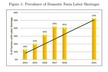
The adverse weather conditions across the European Union have mostly taken a toll on open ground vegetable crops in the Spanish south east, while crops in Italy, Greece and other countries in the Mediterranean basin have been completely destroyed. This has led to a reduction in the EU's total vegetable production of up to 60% compared to the usual levels, a situation which FEPEX predicts will continue at least until early April for leafy vegetables grown in the open ground, such as lettuce, escarole and spinach, whose availability will depend on the weather in February and March.
In the south east of Spain, the current situation for the production is the result of a combination of drought in October and November, heavy rains and floods in December and January, and snowfall and frost in January. FEPEX has estimated that Spain's overall horticultural supply will be reduced by 30%, with notable differences by species. This will have an impact on the entire supply chain, including the processing and fresh cut sector, which has also suffered the consequences of a sharp reduction in the agricultural supply.
However, this crisis has also shown that Spain has been the most reliable supplier in Europe in terms of both volume and quality, as it has maintained its capacity to supply European markets despite the adverse weather conditions.
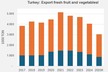
In these months, Spain has been the European market's largest supplier, with a market share that exceeds 50% in normal conditions, and with an export volume that exceeds 100,000 tonnes per month for various products, such as lettuce, tomatoes, cucumbers and peppers, and between 50,000 and 100,000 tonnes for others, such as cabbages. The global monthly production volume under normal conditions has been estimated at 1 million tonnes, which are intended mainly to supply both the EU market and the domestic market with fresh vegetables.
Source: fepex.es