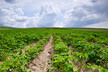
As a result of the late harvest in all NEPG countries, (North-Western European Potato Growers Foundation) it was decided to postpone the announcement of the official NEPG harvest expectation figures to the third week of November. Although no clarity can be given yet, we can assume that the September figure of 24.9 million tonnes will be adjusted downwards. All countries have lesser yields and more quality problems.
Late and risky harvest
The months of September and October were too dry to responsibly grub up for storage in most regions. After the latest rainfall, harvesting is in full swing. In Belgium, at least 35 per cent is still in the ground. The (too) late harvest can bring additional risks with it, partially because night temperatures will start decreasing with occasional ground frost, and days are becoming shorter. Each area is facing enormous quality differences, causing the percentage that is lost to be significantly higher than last season. Damages and growth cracks cause the biggest problems. Growth cracks, processed immediately when harvested, can be dealt with in production. It is a different story when it concerns potatoes from storage, because those have a thicker skin in the growth crack that could also be filled with soil. If still processable, it causes more tare for the cultivator, and more loss during the production process. However, the average high dry matter content results in better returns for the cultivators. Harvesting and storing, however, has to be done very carefully.
Additional costs
Many cultivators had to irrigate before being able to grub up responsibly, which meant additional costs. Besides, some cultivators will have lower yields in kilograms than the volume agreed on in contracts. Processors do not have a mutually unequivocal formula on how to deal with this.
Price trend
Unlike in previous years, prices showed a rising trend from the start of the harvesting period. The combination of supply shortage, rising prices and the prospect of low returns, have prompted processors to buy cheaper ‘dual-purpose strains’ in the starch areas and in Poland. They are even importing from the UK, which has become more appealing, due to the decrease in value of the British pound.