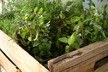
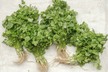
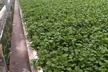
“It’s a complicated season,” Ayelet starts. “There are a lot of parameters influencing the trade, causing the market to be unstable.” The weather in recent months is making the season precarious. “The weather always plays a role, but this year we had a hot summer, which meant the planting for the winter was delayed.” Higher temperatures make it impossible to plant herbs. This resulted in a hole in the supply in September/October for European customers. A month later, in October/November, stormy weather followed and a cooler period, which damaged the crops.
Trade as a basketball game
“The season started with extreme shortages and now there are surpluses. Due to the weather in Israel and outside there are monthly shifts in the market. It’s impossible to predict what the next storm will bring, which makes the season unstable.” Yet he is positive about the situation. Compared to last year the season is better, so “I’d rather say a challenging season than a bad one.”
The herb trade is comparable to a basketball game, according to Omer. “If you read the game right, you’ll make it. If you hold onto the same attitude and don’t change, you’ll lose.”

Stable acreage
Besides the weather, other factors also play a role for the growers and traders. “There are internal factors in the Israeli horticulture that influence the growers,” says Ayelet. High labour costs bring the danger of growers prices themselves out of the market. The shekel is also strong against the Euro, which influences trade. “In general, growers are looking for ways to push down costs.”
The area is reasonably stable. Ayelet reports a slight decrease in cultivation area, Omer sees a shift in the planting of the existing area. “I wouldn’t say the area has increased, but without a doubt it has changed,” according to Omer. “We see that some growers are minimizing planting, whilst others are maximizing. The truth is that only the dedicated growers have growth potential, whilst others only decrease the area.”

Domestic market and export
“The domestic market is growing,” says Ayelet. “Compared to last year that market is bigger. This could have consequences for the export.” In general the export still offers a lot of opportunities. Europe remains the most important destination for the herbs, says Ayelet. Other factors come into play for other markets. The Russian market is difficult due to the economic situation in the country, the United States have strict import protocols, parts of Asia are too far away. “Japan is a potential market, as quality plays a large role there,” says Ayelet.
Despite the challenges, Omer sees increasing interest from the United States and Asia. “We are slowly making progress to extend our reach. The United States and Asia are becoming more attractive, slowly but surely.” The media also plays a role in this, the Israeli trader believes. “Countries we have never done business with before are now placing orders for fresh herbs. Apparently it’s a small world.” The low oil price and the exchange rates make direct import more attractive for Asian, American and Eastern European traders. “This is a big change which, if it keeps up, will let the number of potential clients grow exponentially.”

Edible flowers on the rise
The traditional herbs continue to do well. Basil, chives, coriander, mint, thyme and rosemary will continue to be the front runners. Although the growers of chives are facing challenges. “Basil continues to hold a prominent position and fills most of the area,” explains Omer. “Chives on the other hand, used to be very popular, but are now losing interest due to the high labour costs and competition from Africa.”
A newcomer that is quickly taking over market share is the edible flower. “This market is growing,” says Ayelet. “The edible flower can count on increased interest from chefs and is also being used more often in cooking programmes. Besides this, the flowers are increasingly available in supermarkets. I expect the special herbs to grow, but not as strongly in volume.”
More information:
 AdaFresh
Ayelet Lantzer
[email protected]
www.adafresh.com
 Arava
AravaOmer Kamp
[email protected]
www.arv.co.il