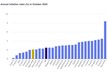
A new study by professional services firm, PriceWaterhouseCoopers, PwC, entitled ‘Impact of Corruption on Nigeria’s Economy’ has shown that Nigeria will lose 30 per cent of its GDP to corruption by 2030.
Speaking on the report, Country and Regional Senior Partner, West Market Area, PwC, Mr. Uyi Akpata said: “”The results of the study show that corruption in Nigeria could cost up to 37% of Gross Domestic Products (GDP) by 2030 if it’s not dealt with immediately. This cost is equated to around $1,000 per person in 2014 and nearly $2,000 per person by 2030. The boost in average income that we estimate, given the current per capita income, can significantly improve the lives of many in Nigeria.”
According to PwC, “Several steps were used in the report to estimate Nigeria’s cost of corruption. The first of which was to examine over 30 studies to understand the way that corruption affects GDP in Nigeria. The study was obtained from International organisations including the OECD, IMF, DFID and Transparency International. The IMF study was selected to estimate the impact of corruption on economic growth. PwC’s Chief Economist and co-author of the report, Dr Andrew S Nevin, noted that PwC formulated the ways in which corruption impacts the Nigerian economy over time and then estimated the impact of corruption on Nigerian GDP, using empirical literature and PwC analysis.
The report further noted that corruption is a pressing issue in Nigeria which affects public finances, business investment as well as the standard of living. It listed three dynamic effects of corruption including; lower governance effectiveness, especially through smaller tax base and inefficient government expenditure.
Source: vanguardngr.com