Garlic injection could tackle tree diseases
Operating under an experimental government licence, a prototype piece of technology to administer the solution is being trialled on a woodland estate in Northamptonshire.
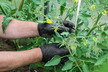
The experimental injection device is made up of a pressurised chamber and eight "octopus" tubes.
The pressure punches the solution through the tubes and through special injection units in to the tree's sap system. The needles are positioned in a way to get allicin evenly around the tree. The moment the active agent starts to encounter the disease, it destroys it. The poison is organic and isn't rejected by the tree. It is pulled up the trunk out along the branches and in to the leaves by the process of transpiration - the flow of water through a plant.
Tree consultant Jonathan Cocking is involved with the development and deployment of the treatment. "Over the last four years we have treated 60 trees suffering badly with bleeding canker of horse chestnut. All of the trees were cured.
This result has been broadly backed up by 350 trees we have treated all over the country where we have had a 95% success rate."
The solution is made by a company in Wales. "Organic cloves of garlic are crushed," said Mr Cocking, "and a patented method is used to amplify the volume of allicin and improve the quality of it so it is stable for up to one year. Allicin in the natural world only lasts for about 5-10 minutes. If you go back to the tree the day after, and crush a leaf that is in the extremity of the crown, you can often smell the garlic."
The goal is to get a commercial licence by the beginning of next year.
According to Prof Stephen Woodward, a tree expert at Aberdeen University: "The antibacterial properties of allicin are well-known in the laboratory. I have not heard of it being used in trees before, but yes this is interesting. It could work."
However Mr Woodward cautioned about such methods of "biological control". "Despite being plant-based that doesn't mean it can't harm an ecosystem. For example cyanide is plant-based."
In recognition of the threat posed by current and future tree and plant biosecurity, Defra recently appointed a Chief Plant Health Officer, and has earmarked £4 million for research in to treatments.
Source: bbc.com