Brazil will present an Unmanned Aerial Vehicle, the latest new technological tool developed by Embrapa Instrumentation to bring rocket science advances into agriculture.
The CEO of the Embrapa Instrumentation, Luiz Mattoso, said that, in addition to the drones, the company was also developing software for the new technology. Mattoso explained that drones could provide information about pests.
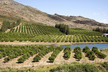
Aerial picture of agricultural crops
"The drones are the advancement on model aircrafts, which are evolving to map rural properties. The software will interpret the images of the maps of the properties, which will help us predict productivity. The drones with sensors can analyse fertility, so we can develop precision agriculture, and provide information on pests. With this tool, we will be able to better control production problems and anticipate them,"said the CEO.
According to Embrapa researcher, Lucio Andre de Castro Jorge, thanks to the images captured by the drones and a good geoprocessing technique, they will be able to accurately identify the existence of pests, bad crops, soil problems, areas affected by erosion and river sedimentation.
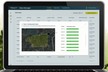
The images collected by the drones have a superior resolution than satellite images and can be analysed with the help of a computer program, which indicates the problems affecting crops via specific colours. The images show the diseases affecting the crops, the crops that failed, the areas affected by nematodes, weed areas, lack of water, allowing the zoning of homogeneous sites, control of crops and the study of soil conservation.
According to Mattoso, the technology should be available in the market starting next year. The cost of the equipment may vary according to its size from 10,000 to 20,000 Brazilian reais (3,240 and 6,490 Euro).
Based on information from Embrapa