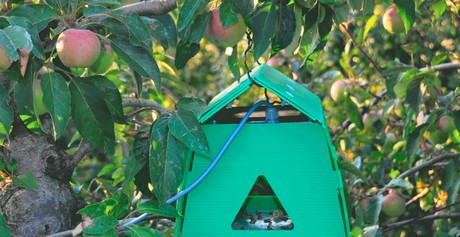
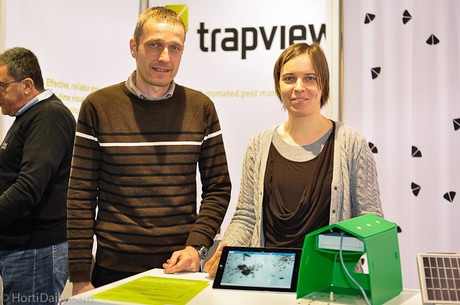
The Trapview iTrap is based on the design of a standard triangle pheromone trap. "Basically it is a standard delta trap that has advanced electronics and is completely independent", said Matej Stefancic from EFOS, who was involved closely in the designing progress. "The trap is enabled with solar panels and a battery unit, so it is completely energy independent. It comes with its own GPRS-modem, so the grower doesn't have to build his own infrastructure to transfer any data. It relies totally on a mobile provider."
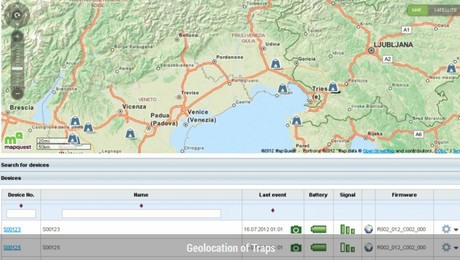
Next to all the features that make the trap a stand alone unit, it sends out a GPS signal, so the grower can see where it is located on a map inside the Trapview app that is accessible from any device that has an on-line connection. The map informs the growers about pests that are being detected by one of the four cameras. These cameras are equipped with flash lights, so the trap can make images in the night so the quality of the images are not being affected by sunlight.
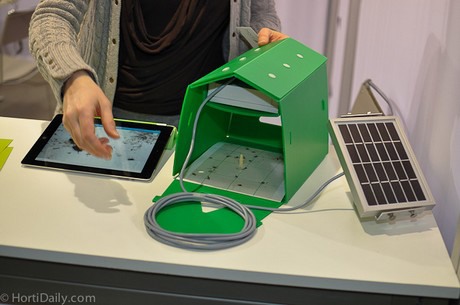
The images made by the trap are being forwarded to EFOS' cloud server, where they are being processed. "That is where the major trick happens", said Stefancic. "Our software is processing the images into data. It adjusts the images and pictures from multiple cameras, and are stitched together into one image. Eventually, the software is capable of recognizing the pest on the image, and can transfer these observations into specified data which is pushed towards the Trapview app."
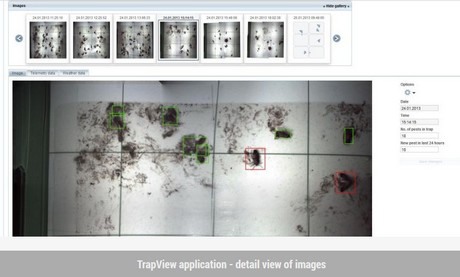
Currently, Trapview is able to recognize codling moth and tuta absoluta with automatic image recognition. "We are now working to make it work with other insects, like white fly," Stefancic said.
Trapview is available worlwide via EFOS' distributors.
 For more information
EFOS Trapview
Matej Stefancic
T: +386 (0)5 757 75 42
[email protected]
www.trapview.com
www.efos.si