US: Potato sprout inhibitor cleared for use
The American Vanguard Corporation has announced that its subsidiary, AMVAC Chemical Corporation has received EPA registration for SmartBlock®, a novel potato sprout inhibitor. Further registration have also been filed for use in Canada an Europe.
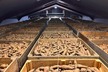
SmartBlock features a patented new class of potato sprout inhibitor technology that represents a breakthrough approach in the treatment of post-harvest potatoes. The product is a naturally occurring molecule, an FDA-approved direct food additive and is classified by the EPA as a biopesticide. It offers safe, comprehensive long-term storage control and requires no capital investment by customers since it is easily applied using existing equipment. AMVAC will begin marketing SmartBlock in the United States immediately.
The technology was discovered at Washington State University by Rick Knowles, scientist and chair of the Department of Horticulture, and Lisa Knowles, assistant research professor of horticulture.
It involves the application of naturally occurring organic compounds after potatoes are harvested and at the onset of sprouting. In testing, the WSU research team found that one application inhibits sprouting from two to three months. Two to three applications can provide full season sprout suppression. Applications leave little residue.
Source: agweekly.com