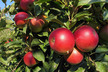
he Polish weather has not been kind to the Polish fruit growers, as the winter already did damage to the apple buds, says Jakub Krawczyk, export manager for Polish apple exporter Appolonia: "During the winter, temperatures dropped to as low as -20°C, causing significant damage to apple buds. The varieties Jonagold, Mutsu, and Ligol were particularly affected. As a result, many trees were in poor condition, and some had to be removed entirely."
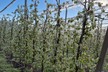
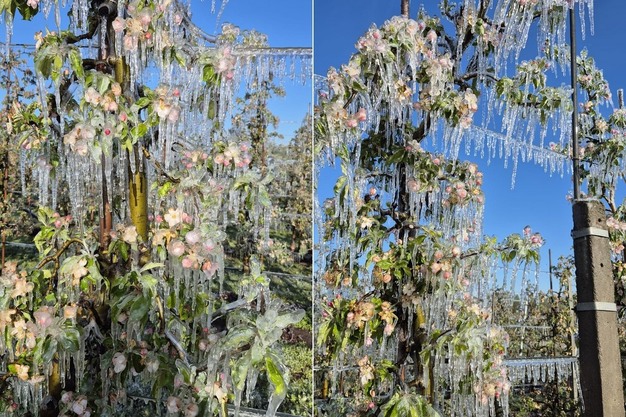
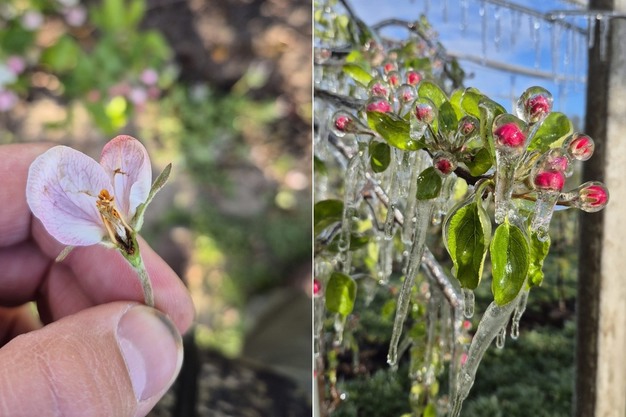
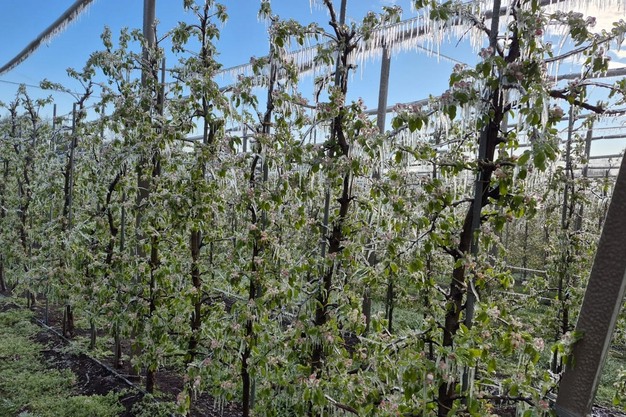
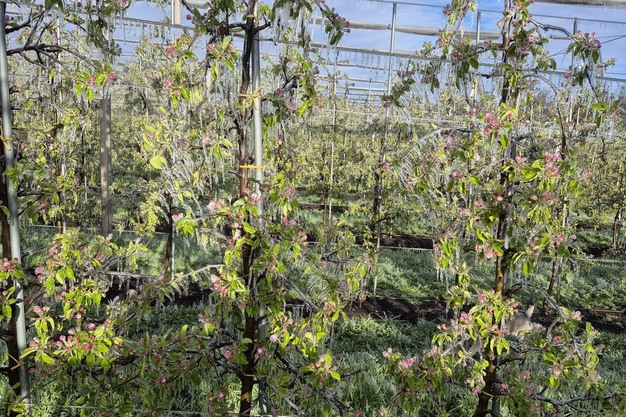
However, last month also had several nights of frosts, with the last one happening during full bloom, Krawczyk explains. "In April, two distinct frost events occurred. The first wave took place between 16 and 18 April, when the trees were at the green bud stage. Early-flowering varieties suffered considerable frost damage at this time. The second and more severe wave occurred during full bloom, from 26 to 29 April, when temperatures fell below zero for several consecutive nights. On the final night, sub-zero temperatures persisted from 9:00 PM until 6:00 AM."
 © Appolonia Sp. z.o.o.
According to Krawczyk, growers employed various frost protection methods: "The overall condition and nutritional status of the trees played a critical role in their resilience, though this was difficult to achieve, as the trees were already weakened by the long and harsh winter. The most effective protection method proved to be overhead sprinkler irrigation. Nevertheless, this technique requires approximately 30,000 to 35,000 liters of water per hectare per hour, which is extremely demanding, particularly under the current drought conditions. On larger orchards, supplying such vast quantities of water proved very challenging, especially since most growers had reserves sufficient for only 1–2 days, while protection was needed for up to 4 days."
 © Appolonia Sp. z.o.o.
"Additionally, the high nighttime electricity demand caused overloads, with some transformers failing and resulting in power outages," Krawczyk continues. "In certain orchards, lower-water-consumption sprinkler systems were used, but these proved ineffective when temperatures dropped below -5°C, as the sprinklers themselves froze. Other methods, such as deploying anti-hail nets, fogging, or lighting fires, were also applied. However, these techniques typically raise the temperature by only 1–2°C, offering limited protection against severe frosts of -6°C to -7°C."
"Despite these protective measures, the trees experienced considerable stress. The frost affected nearly the entire country. Nighttime temperatures reached -5 °C when trees were in full bloom, while daytime temperatures rose to around +7°C, depending on the region. All major apple-producing areas in Poland were impacted, including Sandomierz, the Lublin region, and Mazovia, like Warka and Grójec."
 © Appolonia Sp. z.o.o.
Krawczyk expects a severe drop in the upcoming yield, and growers are concerned: "It's still too early for a full damage assessment, but initial observations indicate that 80–90% of flowers were destroyed. Early forecasts suggest a potential 50% reduction in next season's yield. The final outcome will, of course, depend on orchard location, variety, phenological stage, and weather conditions until harvest. Many growers are deeply concerned about the prospect of a significantly reduced harvest next year. As a result, those still holding apples in ULO cold storage are likely to sell at higher prices to ensure financial survival through two difficult seasons. Most producers are expected to retain their stored fruit in anticipation of rising market prices."
 © Appolonia Sp. z.o.o.
Not just apples were affected; several other fruits will feel the impact of the April frosts, Krawczyk states. "Other fruit crops were also affected, including plums, cherries, peaches, and berries. Summer apple varieties that were in bloom at the time were similarly damaged. Consequently, apples currently in cold storage will need to fill the supply gap left by the lost summer varieties, likely extending sales from storage through to September. This situation is expected to drive apple prices upward throughout the current season in Poland."
For more information:
Jakub Krawczyk
Appolonia
Tel. +48 785 342 930
[email protected]
www.appolonia.pl